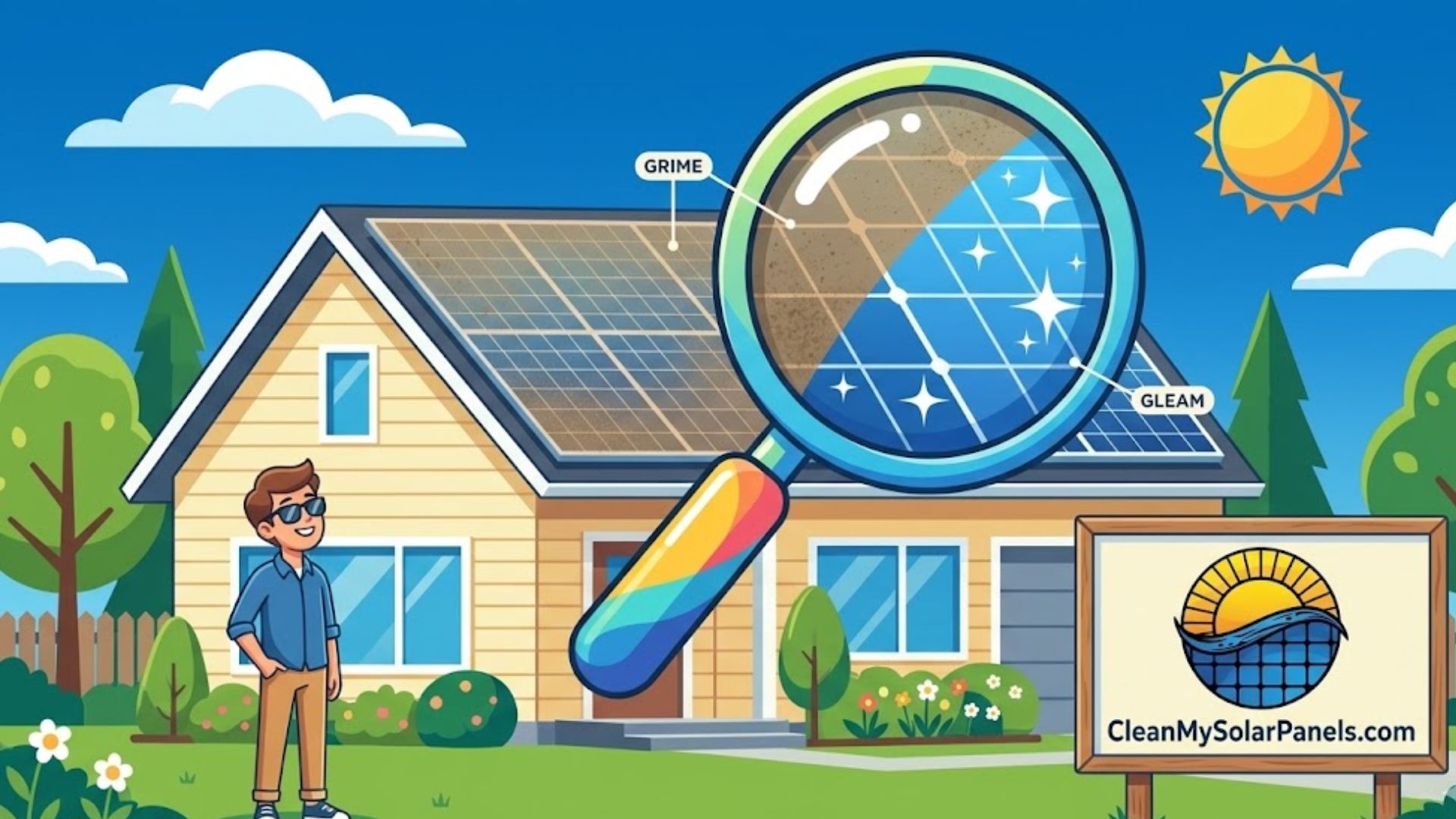
5 Signs Your Solar Panels Need Cleaning (The “Eye Test” Guide)
By Adam, Founder, CleanMySolarPanels · April 20, 2026
If your panels look dull, chalky, or spotted from the street, they need cleaning — soiling costs a typical U.S. system about 5% of annual output, per NREL. Wet climates run closer to 2%; dusty, traffic-heavy, or pollen-heavy areas can hit 7–10%. On a system saving $2,000 a year, that's $100–$140 quietly going back onto your utility bill.
You don't need a ladder to check. A glance from the sidewalk and a look at your monitoring app will tell you in minutes — and the bigger threats, like bird droppings and sap that shade whole cells, are visible from the ground.
Below: the five signs it's time to book a cleaning, starting with the simple "Eye Test."
The Hidden Mechanics: How Dirt Steals Your Energy
Before we jump into the signs, it is vital to understand why you are looking for them. Solar panels are comprised of highly sensitive photovoltaic cells covered by a microscopic anti-reflective coating. This coating is engineered to pull sunlight in and prevent it from bouncing off the glass.
When a layer of dust settles on the panel, it acts like a shade cloth. In older string-inverter systems, this is a catastrophic problem. Because the panels are wired together in a series, if just one panel is heavily shaded by a patch of sticky tree sap, the energy production of the entire system drops to match that single dirty panel. While modern microinverters isolate this issue to individual panels, the overall loss of wattage remains significant.
Many installers fail to emphasize this reality after the sale is complete, which is widely considered the dirty secret of solar power degradation. By staying vigilant and watching for the following five signs, you can protect your investment and ensure your system operates at peak capacity.
Sign 1: The Visual “Eye Test” Fails
You don’t need specialized equipment, drones, or a ladder to know if your panels are filthy. The easiest and most common way to diagnose a dirty solar array is by simply walking out to your sidewalk or backyard and looking up at your roof.
Healthy, highly efficient solar panels share specific visual characteristics. They should look sleek, dark (usually deep blue or black), and highly reflective. When the sun hits them, they should look like premium glass.
Your panels are overdue for a cleaning if you notice any of the following during your visual “Eye Test”:
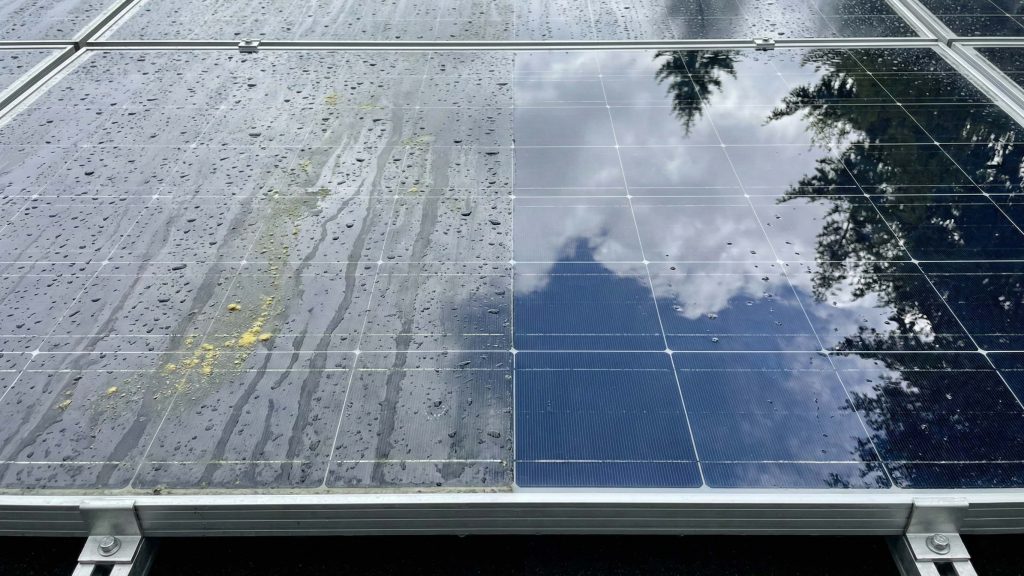
- A Matte or Chalky Finish: Instead of looking glossy and reflective, the panels look dull, flat, and brown. This indicates a baked-on layer of atmospheric dust.
- Visible White Spots: These are usually highly acidic bird droppings. Because they are completely opaque, they block entire solar cells and cause severe localized shading.
- Muddy Rings: If it recently rained lightly, you might see spotted, muddy rings where dirty rainwater evaporated and baked onto the glass.
If your panels look like the windshield of a car that hasn’t been washed in six months, you are actively losing power.
Sign 2: Unexplained Drops in Your Monitoring App
If you prefer hard, undeniable data over a visual inspection, your smartphone holds the answer. Most modern solar energy systems (like those utilizing Enphase or SolarEdge microinverters) come with a dedicated monitoring app that tracks your daily, weekly, and monthly energy production.
Get into the habit of checking this app once a month. You are looking for a specific pattern: an unexplained drop in power output on a perfectly sunny day.
If it is mid-July, the sky is cloudless, and there is no shade from nearby trees falling on your roof, your system should be hitting its peak production numbers. If you look at your app and notice that your system is producing 15% to 20% less energy than it did on the exact same sunny day last year, dirt is highly likely to be the culprit.
By ignoring this data, you are quite literally throwing away the free energy you already paid to generate. Taking action on this data is the first step in understanding the true benefits of clean solar panels.
Sign 3: You Live in a High-Risk Environment
Sometimes, your local environment dictates your cleaning schedule before you even look at your roof. If you live in an area prone to heavy airborne debris, you cannot rely on a standard “once-a-year” maintenance mindset.
You should immediately schedule a professional cleaning if your home has recently been exposed to:
- Nearby Wildfires: Wind can carry wildfire ash for hundreds of miles. Ash is highly opaque and blocks a massive amount of sunlight. Worse, when ash mixes with morning dew, it becomes slightly acidic and can permanently etch your glass.
- Agricultural Harvests: If you live near farmland, massive tractors kick up heavy soil, pesticide dust, and chaff during the spring planting and autumn harvest seasons. This creates a thick brown haze that aggressively coats nearby roofs.
- New Construction: If a new housing development or major road work is happening in your neighborhood, the air is filled with drywall dust, sawdust, and concrete particulate that settles directly onto your panels.
Regional Clues: How Your Local Climate Impacts the Signs
The “signs” of a dirty solar panel look vastly different depending on your geography. Understanding your specific microclimate is crucial for identifying when it’s time for maintenance. Here is how different regions impact your visual “Eye Test”:
- Coastal Environments: Salt spray is highly corrosive and leaves a distinct, cloudy white film on panels. If you live on the coast, scheduling specialized services like residential solar panel cleaning in Key West or managing heavy salt spray buildup in Boca Raton requires frequent monitoring. In the Pacific Northwest, coastal squalls necessitate similar specialized solar panel maintenance in Astoria.
- Humid & Inland Climates: High humidity accelerates algae and mold growth along the panel frames. Inland properties face unique hurdles, so finding reliable solar panel cleaning experts in Orlando or preventing mold and rain spotting in Davie means staying vigilant after heavy rain seasons.
- High Desert & High Winds: High winds deposit thick, baked-on dust and sand. Homeowners in these arid regions need frequent solar panel cleaning in Bend, while those near the gorge must prioritize regular solar panel washing in Hood River to combat windblown debris.
- Dense Canopies & Valleys: The “Eye Test” here might reveal thick green moss, sticky sap, or agricultural dust. The Willamette Valley’s environment makes scheduling seasonal solar panel washing in Eugene essential for summer efficiency, while dense tree coverage requires combatting heavy pine needles with professional solar cleaners in Gresham.
If you are unsure how your specific climate impacts your roof, you should review our comprehensive guidelines for how often you should clean your solar panels based on your region.
Sign 4: Increased Bird Activity or Tree Sap
Take a look at the trees surrounding your home. If your roof is partially shaded by large oaks, pines, or Douglas Firs, you are battling a massive biological threat: sticky tree sap and nesting birds.
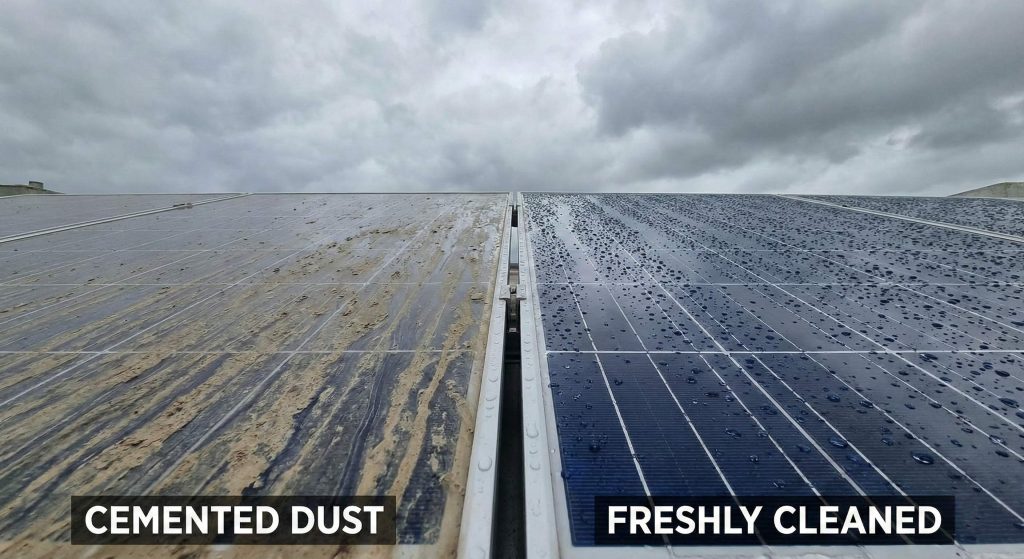
Sap acts exactly like superglue on your solar panels. It sticks to the hot glass and traps pine needles, dirt, and leaves against the panel. Standard rain will absolutely never wash sap away. If you notice sap on your driveway or car, it is guaranteed to be on your panels as well. (To understand why this is so dangerous, read our guide on how to clean tree sap off solar panels).
Furthermore, trees attract birds. If you notice pigeons nesting under your panels or an influx of birds on your roof, you must act fast. Highly concentrated bird droppings create severe electrical “hotspots” that can permanently burn out the internal cells of your panels. If pests have moved in, you will need a deep clean and the installation of a physical barrier. Read our guide on how to stop pests from ruining your system to learn more about critter guards.
Sign 5: The Calendar Test (It’s Been Over a Year)
If your panels pass the Eye Test, your app looks normal, and you don’t live in a particularly dusty or wooded environment, you might think you are in the clear. However, there is one final, undeniable sign: the Calendar Test.
If you have to ask yourself, “When was the last time we had these cleaned?” and you cannot remember, it is time to book a professional.
Most major Tier-1 solar manufacturers (like SunPower, Tesla, and REC) require proof of regular, professional solar panel maintenance to keep your 25-year equipment warranty valid. If a panel fails and the manufacturer determines it was caused by localized heat stress from years of accumulated grime, they can legally deny your warranty claim. Having your panels professionally cleaned at least once a year is the best way to keep your system highly efficient and your warranty completely bulletproof. If you want to see the numbers behind this strategy, a comprehensive analysis of solar panel cleaning benefits proves that annual maintenance always yields a positive financial return.
What NOT to Do: The Dangers of DIY
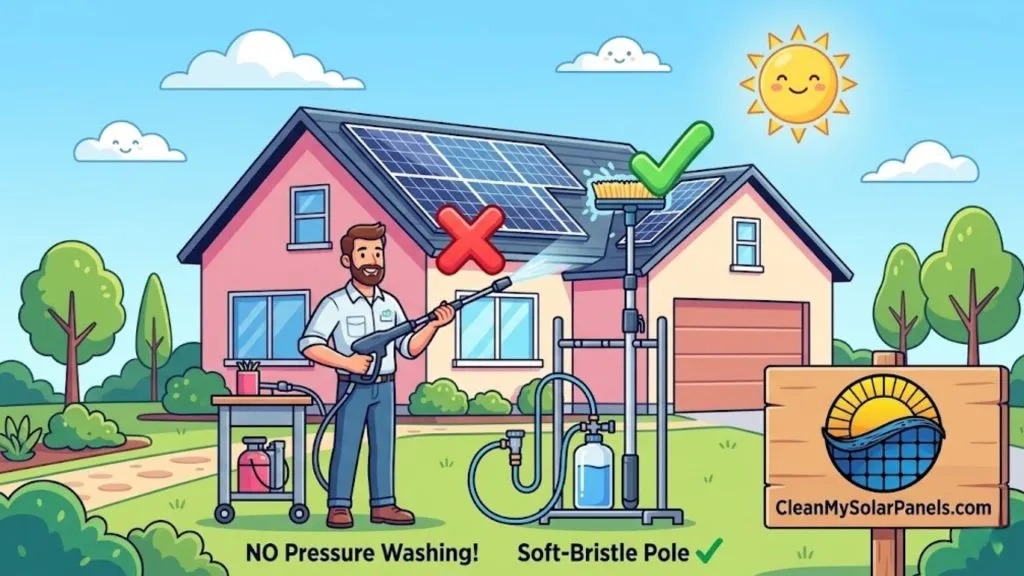
Once homeowners realize their panels are dirty, many try to save a few dollars by dragging a garden hose up a ladder on a Saturday afternoon. This is a massive, incredibly dangerous mistake.
Here is why you should never attempt a DIY solar cleaning:
- Hard Water Stains: Standard tap water is full of minerals like calcium. If you spray tap water onto hot solar panels, the water evaporates instantly, leaving chalky white mineral stains baked onto the glass. This creates the exact shading problem you are trying to fix!
- Scratched Glass: Using standard garage brooms, rough sponges, or household chemicals will permanently scratch the sensitive anti-reflective coating on the solar glass.
- The “Dish Soap” Mistake: Wondering if you can use dishwashing liquid to clean solar panels? Absolutely not. It leaves a soapy film that acts as a magnet for windblown dust, making your panels dirtier than before.
- Severe Injury: Climbing onto a slanted, potentially slippery roof is a recipe for a severe, life-altering ladder fall. Even when attempting safely cleaning solar panels from the ground using consumer-grade extension poles, the sheer weight of the equipment can cause muscle strain or property damage if you aren’t experienced.
If you want a deeper dive into the mechanical and financial risks of doing nothing (or doing it wrong), check out our comprehensive guide on how bad it is if you don’t clean your solar panels.
Why You Should Rely on CleanMySolarPanels.com
To clean panels safely and protect your warranty, professionals use highly specialized equipment. They use Deionized (DI) Water Systems that strip out 100% of the dissolved minerals from the water, paired with ultra-soft carbon fiber brushes. This ensures the panels dry completely spotless and streak-free without the use of harsh chemicals or abrasive squeegees.
But how do you find someone who actually uses this equipment? That is exactly why CleanMySolarPanels.com exists.
We act as your ultimate, unbiased matchmaker in the solar industry. We make it incredibly easy to find qualified, insured, and highly-rated solar cleaning professionals right in your specific neighborhood. We connect you with the very best local experts so you don’t have to waste hours searching the internet, reading questionable reviews, or guessing who to trust on your roof.
Restore Your Power Today
Your solar panels represent a massive, exciting investment in your home’s future. You paid for them to reduce your energy bills and give you independence from the utility grid.
When you break down the true cost of a dirty solar panel and compare it to the affordable flat-fee of a professional cleaning, the math becomes undeniable. The service literally pays for itself in recovered energy production.
Don’t let dirt eat your hard-earned profits.
If your roof failed the Eye Test today, take the risk and the hassle out of solar maintenance. Find a trusted, highly-rated solar cleaning pro in your area and secure the best price today.