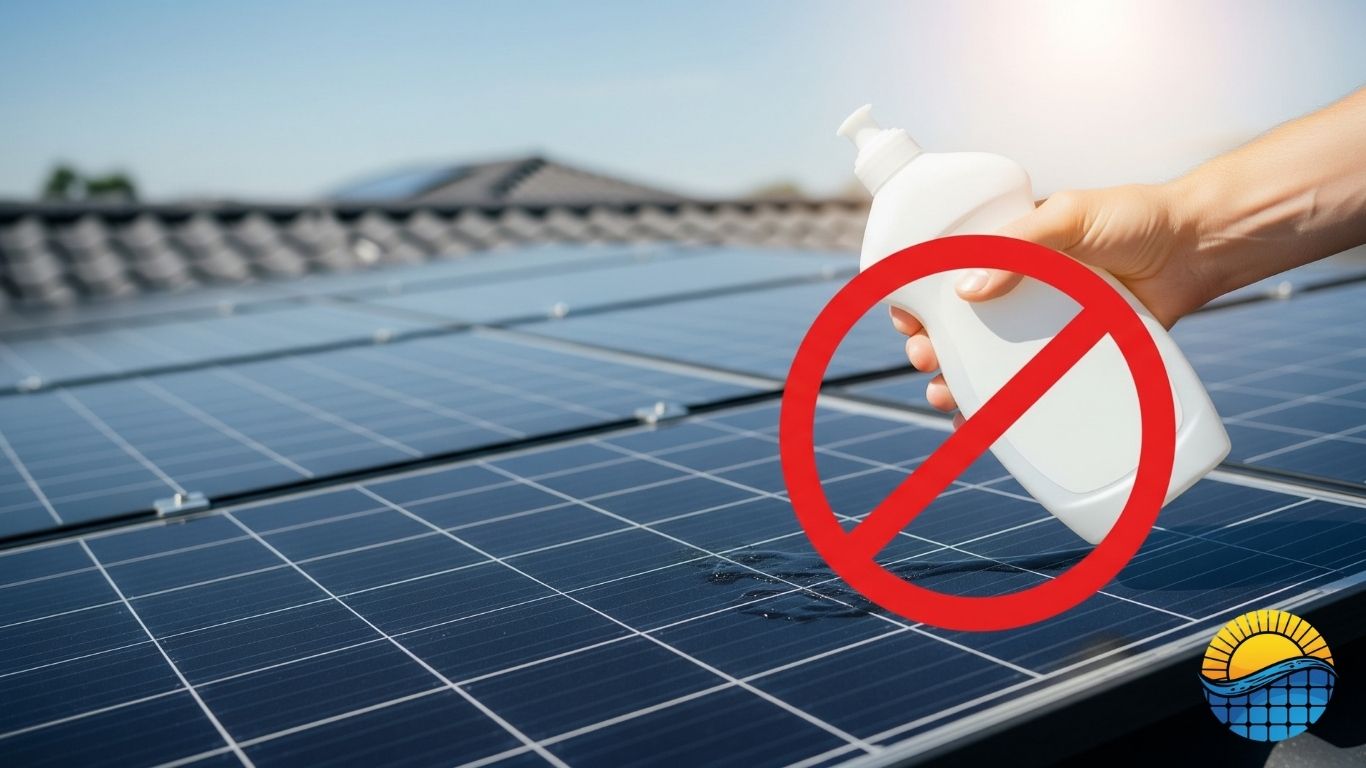
Can You Use Dishwashing Liquid to Clean Solar Panels?
By Adam, Founder, CleanMySolarPanels · June 22, 2025
No — don't clean solar panels with dishwashing liquid. A 2025 University of Turku study found that panel glass washed with dish soap actually transmitted less light than dirty, uncleaned glass — the detergent leaves a residue and can permanently erode the anti-reflective coating.
There's a warranty problem too. Most manufacturers exclude damage from improper cleaning, so a bottle of Dawn can cost you coverage on a system worth $20,000. A few brands do allow mild soap with strict conditions, which is why the "it's fine" advice keeps circulating.
Below: what dish soap chemicals actually do to panels, where each major manufacturer stands, and the safe ways to clean instead.
The $20,000 Mistake: Why You MUST NOT Use Dish Soap on Solar Panels
Let’s get straight to the point: You should never use dish soap to clean your solar panels.
While countless DIY blogs and forums suggest a few drops of “mild” dish soap is a cheap and easy solution, this advice is dangerously wrong. Using a household detergent like Dawn or Palmolive on your high-tech solar array can lead to irreversible damage, a significant drop in energy production, and could even void your manufacturer’s warranty.
Your solar panel system is a major investment, designed to generate clean energy for over 25 years. Treating it like a greasy dinner plate is a recipe for disaster.
At CleanMySolarPanels.com, we are dedicated to helping you protect that investment. We are the leading online directory for connecting homeowners and businesses with local, qualified, and reputable solar panel cleaning professionals who use the right methods to maximize your energy output safely.
Before you reach for that bottle of soap, understand the risks. Find a trusted, local professional through our directory to ensure the job is done right.
The Great Solar Cleaning Debate: “Can” vs. “Should”
There’s a massive gap between what can physically remove dirt and what should be used on your solar panels. The “dish soap method” is popular because it’s simple and the ingredients are on hand. However, this advice treats a precision optoelectronic instrument like a car window.
The consequences are vastly different. A mistake cleaning your eyeglasses is an annoyance; causing similar damage to a $20,000 solar array is a significant financial blow. The goal of cleaning isn’t just to make your panels look nice—it’s to preserve peak power output and protect your warranty. This is why the advice from materials scientists and professional solar maintenance providers stands in stark opposition to the popular DIY “wisdom.”
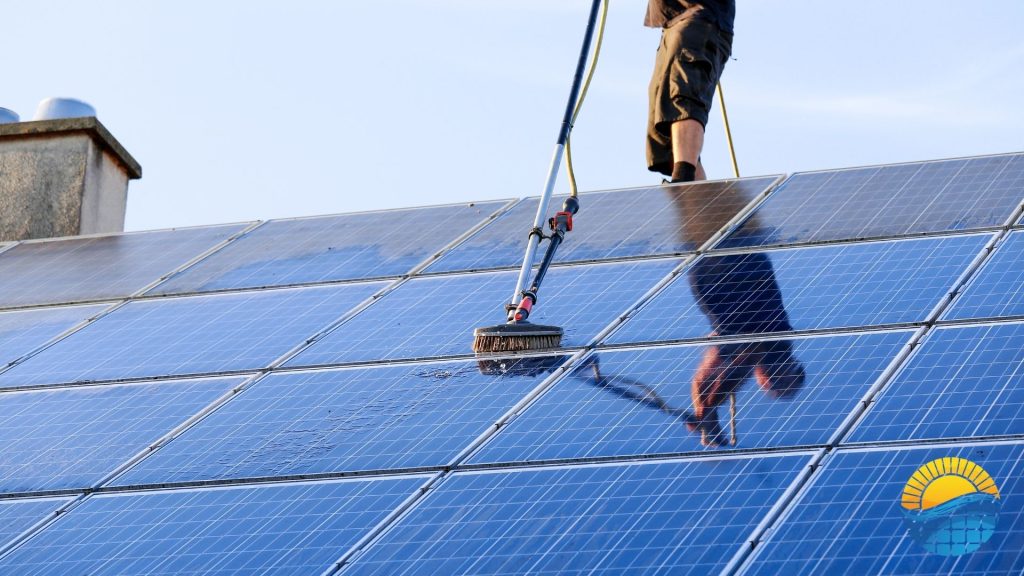
More Than Glass: The Delicate Surface of Your Solar Panels
To understand why dish soap is so harmful, you need to know what you’re actually cleaning. A solar panel isn’t a simple sheet of glass. It’s a complex, multi-layered device.
- Tempered Glass: This tough outer layer protects the delicate solar cells from hail and debris. However, its surface can be altered by chemical films left behind by soaps.
- Anti-Reflective (AR) Coating: This is the most critical layer in the cleaning discussion. The AR coating is a nano-engineered film designed to maximize light absorption, directly boosting your panel’s efficiency. It is not a protective clear coat; it’s an active optical component.
- Frame and Seals: Anodized aluminum frames and polymer seals hold the panel together and keep moisture out. The wrong chemicals can corrode the frame and cause the seals to become brittle and crack, leading to catastrophic failure.
Using an improper cleaning agent risks damaging all three of these critical components.
The “Mild Soap” Myth: An Expanded Chemical Breakdown
The term “mild soap” is a marketing phrase for gentleness on skin, which is completely irrelevant to its chemical effect on industrial materials. Modern dish soaps are powerful synthetic detergents designed to strip grease. This chemical aggressiveness is exactly what makes them a threat to your solar panels.
Panel manufacturers warn against using corrosive solutions, including those with a high alkaline or acid base. Even if a dish soap has a neutral pH, its underlying ingredients can leave behind a damaging, performance-killing residue.
Here is a more detailed breakdown of typical dish soap ingredients and the danger they pose to your solar array:
| Ingredient Category | Specific Chemical Example | Function in Detergent | Potential Risk to Solar Panel Components |
| Anionic Surfactants | Sodium Lauryl Sulfate (SLS), Ammonium Laureth Sulfate | Primary cleaning & foaming | Highly aggressive cleaning action can interact with or damage the porous AR coating. High potential to leave a stubborn, “sticky” residue film that is difficult to rinse, attracts new soiling, and reduces light transmission. |
| Non-ionic Surfactants | Alkyl polyglycosides, Lauramine Oxide | Grease cutting, foam boosting | While gentler than anionics, these can still contribute to a performance-inhibiting residue film and may not be compatible with the specific chemistry of the AR coating or polymer seals. |
| pH Adjusters / Builders | Sodium Hydroxide, Citric Acid, Sodium Carbonate | Balances formula pH for stability & performance | Can create an alkaline (pH > 7) or acidic (pH < 7) solution. Alkaline agents are known to be corrosive to anodized aluminum frames and can damage AR coatings. Acidic agents can degrade some seals. |
| Solvents | Alcohol Denat., Propylene Glycol, Ethanol | Stabilizes formula, keeps ingredients in solution | Can potentially degrade, dry out, or soften critical polymer seals (EPDM, silicone) over time with repeated exposure, leading to moisture ingress. |
| Water Softeners (Chelators) | Tetrasodium Glutamate Diacetate, Sodium Citrate | Binds with minerals in hard water to improve cleaning | Can leave behind their own mineral salt deposits on the panel surface if not rinsed thoroughly with purified water, causing spotting and impeding light. |
| Enzymes | Protease, Amylase | Breaks down protein & starch food stains | Designed for organic food matter, these are unnecessary for typical panel soiling (dust, pollen) and add another layer of potential residue. |
| Additives | Fragrances, Dyes, Preservatives, Thickeners | Provides scent, color, stability, and texture | Completely unnecessary chemicals that serve no cleaning purpose for solar panels. They significantly contribute to the residue film left on the panel surface. |
This chemical cocktail was never intended for sensitive, high-tech surfaces. The only way to be sure you’re using a safe cleaning agent is to hire a professional or use a product specifically designed for solar panels.
The Proof: How Soap Kills Your Energy Production
The argument against dish soap isn’t just theoretical. A pivotal 2025 study from the University of Turku in Finland delivered a stunning conclusion: solar panel glass cleaned with dish soap transmitted less light than the dirty, uncleaned glass.
The damage was not reversible with a simple rinse. Researchers believe this is due to two primary mechanisms:
- Irremovable Residue: The soap’s chemicals form a microscopic film that bonds to the AR coating, blocking sunlight.
- Permanent Coating Damage: The detergent is so effective it chemically erodes the delicate nanostructure of the AR coating itself.
This creates a vicious cycle. The residue left by soap is sticky, attracting dust and pollen and causing the panels to get dirty faster. This forces you to clean more often, compounding the damage and risk with every wash.
Your Warranty Is on the Line: Expanded Manufacturer Guidelines
Ultimately, this is a financial decision. Every solar panel warranty has a clause that voids coverage for damage caused by “improper maintenance” or the use of unapproved chemicals.
Using dish soap gives the manufacturer a perfectly valid reason to deny a future warranty claim for underperformance, leaving you to foot the bill. The panel manufacturer’s maintenance manual is the final authority, and it overrides any advice you find online.
Here is an expanded comparison of how top manufacturers view the issue:
| Manufacturer | Official Stance on Dish Soap/Detergents | Approved Cleaning Agents/Methods | Prohibited Agents/Methods | Key Warranty Clause |
| Canadian Solar | Forbids corrosive solutions, including alkali. | Water with low mineral content (≤ 300 PPM) and near-neutral pH (≈7). Environmentally friendly agent for grease. | Corrosive solutions (acid, alkali, acetone, industrial alcohol), abrasive cleaners, high-pressure washers, de-greasers. | Damage induced by inappropriate cleaning procedures will void the warranty. |
| Trina Solar | Cautious. Allows environmentally friendly agents for heavy grease. | Water at a similar temperature to the panel. Soft brush/sponge. | Scrapers, improper dry rubbing, harsh industrial solvents. | Damages from inappropriate cleaning procedures can void the warranty. |
| Qcells | Advises against DIY maintenance; implies any unapproved method is risky. | Soft microfiber cloth, lukewarm water. Professional service recommended. | Abrasive materials, high-pressure washers, harsh chemicals. | Damage due to inappropriate maintenance is excluded from warranty. DIY maintenance could invalidate the warranty. |
| Jinko Solar | Permitted with strict limits; water only is preferred. | Neutral or mildly acidic commercial detergents, ethanol, methanol. Must be rinsed immediately. | Strong acids (hydrofluoric), strong alkalis (sodium hydroxide), abrasive agents, nitro thinner, steam cleaners. | Damages induced by inappropriate cleaning procedures will void the warranty. |
| REC Group | Permitted with strict limitations for stubborn marks. | “Mild biological and biodegradable washing-up liquid”. Diluted isopropyl alcohol (<10%). Must be rinsed immediately. | Acid or alkali detergents, high-pressure hoses, steam cleaners, metallic sponges. | Warranty is only valid if installation manual instructions are followed. |
| Sunrun | Explicitly permits Dawn dish soap. | Mild, biodegradable soap (specifically Dawn), vinegar/water mixtures. Must be rinsed thoroughly. | Abrasive cleaners, Windex (ammonia-based), bleach. | Recommends rinsing thoroughly to avoid residue affecting performance. |
| Enphase (Microinverters) | Recommends “soapy water” or “dish soap” in community forums. | Soapy water, soft non-abrasive brush. | Harsh chemicals, abrasive materials. | Defers to the panel manufacturer’s guidelines, as they do not make the panel itself. |
| Silfab Solar | “Gentle soap” is permitted, but advised to be used sparingly and rinsed well. | Commercial glass cleaners (with isopropanol/ethanol), solution of gentle soap, vinegar, and water. | Harsh chemicals, abrasive brushes, high-pressure washers. | Damage to AR coating can reduce effectiveness and possibly void warranty. |
The safest path is clear: stick to what the manufacturer explicitly approves. If you’re unsure, don’t risk it.
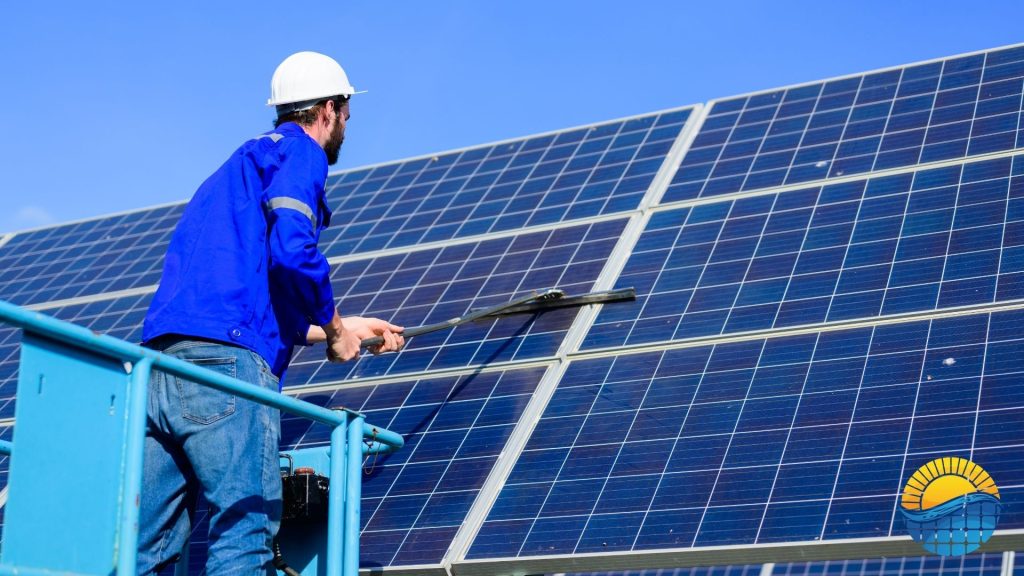
The Definitive Guide to Safe Solar Panel Cleaning
Protect your investment by following this simple, risk-based framework.
Tier 1: The Gold Standard (Zero Risk)
- Method: Clean exclusively with purified water (deionized or reverse osmosis) and a soft, non-abrasive solar panel brush. This is the method most professionals use and is approved by virtually all manufacturers.
Tier 2: The Professional Standard (Minimal Risk)
- Method: For stubborn grime, use a specialized, biodegradable solar panel cleaning solution that is explicitly formulated to be safe for AR coatings. This is the best option when water isn’t enough.
Tier 3: The Cautious DIY Approach (Low but Non-Zero Risk)
- Method: Use a cleaner specifically named and approved in your panel’s manual or a highly diluted vinegar/water solution (1:8 ratio), followed by a thorough pure water rinse. Use this only if Tiers 1 and 2 are not feasible.
Tier 4: The Unadvised Method (High Risk)
- Method: Using any household dish soap, laundry detergent, or other unspecified cleaner. This method is strongly discouraged due to the high risk of power loss, accelerated soiling, and voiding your warranty.
Protect Your Investment, Maximize Your Power
The idea that you can safely clean a high-tech solar array with dish soap is a myth. The scientific evidence, professional best practices, and manufacturer warranties all tell the same story: it’s a gamble you can’t afford to take.
To protect the performance, integrity, and financial value of your solar energy system, you must reject dish soap and other household cleaners.
Here’s your action plan:
- Read Your Manual: Your panel manufacturer’s manual is the only binding authority on safe, warranty-compliant cleaning.
- Default to Water: The safest and most universally accepted method is purified water and a soft brush.
- Hire a Professional: The best way to ensure your panels are cleaned safely and effectively is to hire a vetted professional.
Don’t risk your $20,000 investment for the sake of convenience. Use the CleanMySolarPanels.com directory today to find a qualified, reputable solar panel cleaner in your area and keep your system generating maximum power for decades to come.