How to Stop Mud Splash-Back on Oregon Ground-Mounted Panels
By Adam, Founder, CleanMySolarPanels · April 10, 2026
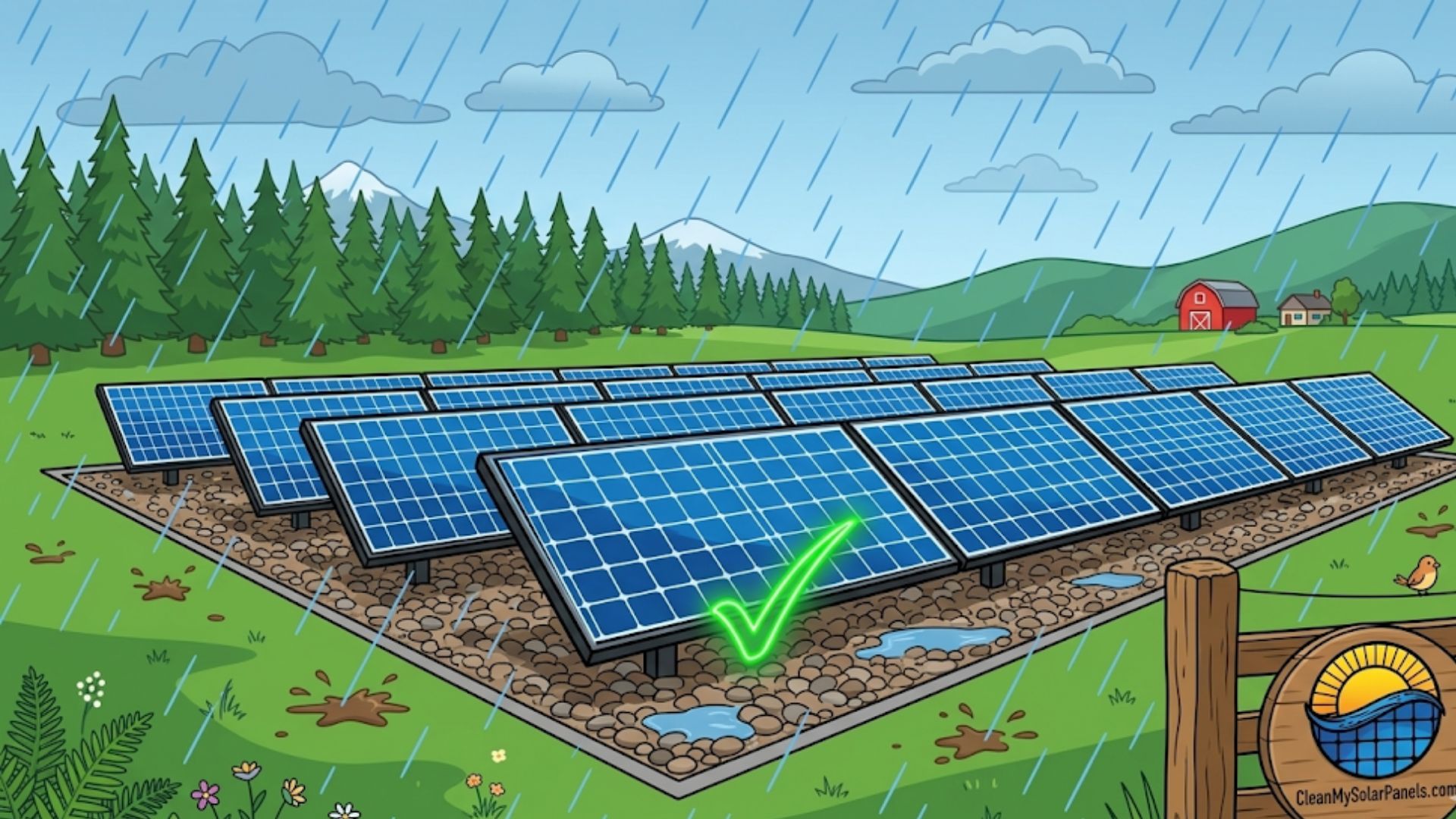
The fix for mud splash-back is a barrier in the splash zone — a crushed rock trench under the drip line is the most effective permanent solution. Rain cascading off a tilted array hits bare earth just 12–24 inches below the bottom edge and kicks mud straight onto your lowest row of panels. A shallow trench of drain rock (or micro-clover, or bark dust) breaks that impact before the soil can splash.
The stakes are higher than ordinary grime. Dust costs a few percent — NREL measures 2% to 7% depending on climate — but dried mud is opaque, and on a string-inverter system one muddy bottom row can drag down the whole array.
Below: why splash-back happens, four landscaping fixes, how to clean caked mud without scratching the glass, and Oregon's region-by-region soil challenges.
The Anatomy of the Mud Splash-Back Phenomenon
To solve the mud problem, we first have to understand the physics of how it gets onto your panels in the first place.
Most ground-mounted solar arrays are built on driven steel piers or concrete ballasts. To maximize energy production, the panels are tilted at an angle (usually between 30 and 45 degrees in Oregon) to catch the southern sun. Because of this tilt, the lower edge of the solar array is often positioned very close to the ground—sometimes with only 12 to 24 inches of clearance.
When a heavy Pacific Northwest rainstorm rolls through, massive amounts of water cascade down the slanted surface of your entire solar array. This creates a waterfall effect off the bottom edge of the panels. When this concentrated sheet of water hits the bare earth directly below, it strikes with significant kinetic energy.
The water displaces the wet soil, creating a localized splash zone. The mud, dirt, and muddy water are violently ejected upward, directly onto the lowest row of your solar panels. As the rain stops and the sun comes out, that muddy water evaporates, leaving behind a thick, baked-on layer of heavy soil.
Why Mud is Infinitely More Dangerous Than Dust
You might be thinking, “It’s just a little dirt. How bad can it be?”
The reality is that mud splash-back is exponentially more destructive to your solar investment than standard airborne dust or pollen. Here is why mud is the ultimate enemy of ground-mounted efficiency:
1. Total Light Blockage (Opaque Shading)
Standard summer dust creates a hazy film that costs a few percent — NREL measures 2% to 7% depending on climate. Mud, on the other hand, is completely opaque. When a thick layer of mud dries on the bottom of your panel, it blocks 100% of the sunlight from reaching those specific photovoltaic cells.
2. The String Inverter Bottleneck
Many rural, ground-mounted systems use “string inverters” to keep hardware costs down. In a string inverter system, the panels are wired together in a series. If the bottom row of your panels is heavily shaded by mud, the energy production of the entire string drops to match that single dirty row. A few inches of mud on the bottom edge can cripple the output of your entire massive array.
3. Severe Hotspot Creation
When mud permanently shades a specific cluster of solar cells, the energy produced by the clean cells around it gets bottlenecked. This electrical resistance generates massive amounts of heat, creating a “hotspot.” These hotspots can permanently burn out the internal wiring of the panel, drastically reducing its 25-year lifespan and leading to expensive hardware replacements.
4. Abrasive Scratching
Oregon mud is full of tiny, jagged minerals, silica, and crushed rock. If you attempt to wipe dry mud off your panels, those minerals act like coarse sandpaper, instantly scratching the delicate anti-reflective coating on the solar glass and voiding your manufacturer warranty.
If you want to dive deeper into the financial mechanics of localized shading and energy loss, we highly recommend reading our comprehensive breakdown of the long-term financial benefits of a pristine solar array.
4 Landscaping Solutions to Stop Mud Splash-Back
The secret to cleaning ground solar panels OR maintaining them properly isn’t just about washing them more often; it is about proactive landscaping. You have to break the kinetic energy of the water falling off your panels before it can displace the soil.
Here are the four best ways to permanently stop mud splash-back on your rural property.
Solution 1: The French Drain / Crushed Rock Trench
This is the absolute most effective, permanent solution for ground-mounted arrays. By installing a bed of heavy, crushed rock directly beneath the drip line of your panels, you completely eliminate exposed soil in the splash zone.
- How to do it: Dig a shallow trench (about 4 to 6 inches deep and 18 inches wide) directly underneath the entire lower edge of your solar array. Line the trench with heavy-duty commercial weed barrier fabric. Fill the trench with 1-inch to 2-inch crushed river rock or drain rock.
- Why it works: When the heavy rainwater cascades off the panels, it hits the jagged rock instead of the mud. The rock disperses the kinetic energy of the water instantly. The water then drains harmlessly through the rocks and into the ground, completely eliminating the upward splash.
- The Pros: It is a permanent, zero-maintenance solution that looks incredibly clean and professional.
- The Cons: It requires heavy physical labor and the cost of having gravel delivered to your rural property.
Solution 2: Planting Low-Growth Ground Cover (Micro-Clover)
If you have a massive agricultural array and hauling tons of gravel isn’t feasible, utilizing strategic vegetation is a fantastic, eco-friendly alternative. However, you cannot just let standard pasture grass grow wild, or it will eventually grow tall enough to shade the panels from the front.
- How to do it: Till the bare earth directly beneath and in front of your array. Seed the area with a highly durable, low-growth ground cover. “Micro-clover” (Trifolium repens) or creeping thyme are exceptional choices for the Pacific Northwest.
- Why it works: The dense root system of the ground cover locks the topsoil firmly in place, preventing it from turning into loose mud. The soft leaves of the clover act as a cushion, absorbing the impact of the falling water and preventing splash-back.
- The Pros: It is inexpensive, environmentally friendly, and adds nitrogen back into your soil. Because a micro-clover only grows a few inches tall, it will never shade your panels.
- The Cons: It requires watering during the dry Oregon summers to establish the root system, and it may take a full season to grow in completely.
💡 Pro Tip: Managing the environment beneath your array is critical for airflow and pest control. For more detailed advice on managing weeds and preventing rodents from nesting under your system, check out our guide to managing the vegetation and debris under your solar panels.
Solution 3: Heavy Bark Dust or Cedar Chips
If you need an immediate, weekend-project fix before the heavy November rains arrive, laying down a thick layer of bark dust or large cedar wood chips is a highly effective temporary barrier.
- How to do it: Lay down a thick layer of landscaping fabric directly under the drip line of your array. Cover it with 3 to 4 inches of heavy cedar chips or coarse bark nuggets. Do not use fine topsoil or compost, as this will just turn into mud.
- Why it works: Similar to gravel, the heavy wood chips absorb the impact of the falling water, stopping the mud from splashing upward.
- The Pros: It is cheap, easy to install yourself in a single afternoon, and highly effective.
- The Cons: Wood chips decompose over time. In the damp Pacific Northwest, they will break down into soil within two to three years, meaning you will have to reapply fresh bark dust regularly to maintain the barrier.
Solution 4: Adjusting the Seasonal Tilt Angle
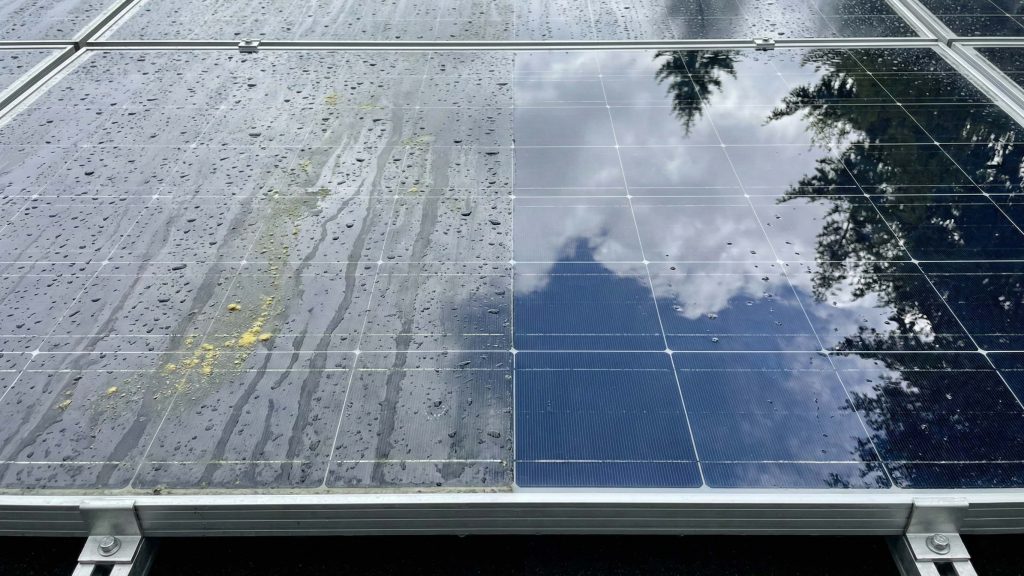
Many ground-mounted solar arrays are built on adjustable racking systems. This allows homeowners to manually change the tilt angle of the panels to follow the sun’s trajectory (steeper in the winter to catch the low sun, flatter in the summer).
If your system is adjustable, moving your panels into their steepest winter angle serves a dual purpose. First, it maximizes your energy production during the short, overcast winter days. Second, it significantly raises the bottom edge of the solar panels higher off the ground, putting more distance between the delicate glass and the mud splash zone.
How to Clean Mud Off Panels Safely (Without Scratching Them)
If you are reading this after a massive rainstorm and your panels are already caked in thick, dried mud, you have a delicate cleanup job ahead of you.
When it comes to mud removal solar maintenance, the standard rules of cleaning go out the window. You cannot just grab a wet rag and wipe them down. As mentioned earlier, Oregon mud is full of abrasive silica and jagged minerals. Wiping dried mud is exactly like taking sandpaper to your expensive anti-reflective coating.
Here is the safe, manufacturer-approved way to remove heavy mud from your ground-mounted array:
Step 1: The Pre-Soak
You must rehydrate the mud before you ever touch it with a brush. Using a standard garden hose (with a gentle shower setting, never a high-pressure jet), thoroughly soak the muddy areas of the panels. Walk away and let the water sit for 5 to 10 minutes. The mud will absorb the water, softening the baked-on clay so it can be lifted safely.
Step 2: The Agitation (Using the Right Brush)
Once the mud is completely soft, you must use a specialized, ultra-soft, flagged-bristle solar brush. Do not use a garage broom or a car wash sponge. Gently agitate the softened mud. Let the bristles do the work; never apply heavy downward pressure, as pushing the minerals into the glass will cause micro-scratches.
Step 3: The Pure Water Rinse
This is the most critical step. You cannot finish the job with tap water. If you rinse the mud away with your garden hose, the hard water will dry and leave a permanent chalky mineral scale on your panels. Professional cleaners use specialized Deionized (DI) water filtration systems that strip 100% of the minerals out of the water. Rinsing the panels with pure DI water ensures the glass dries perfectly spotless and streak-free.
If you are unfamiliar with the mechanics of DI water systems or the specific types of soft-bristle brushes required to protect your warranty, we highly recommend reviewing our step-by-step visual breakdown of the cleaning process.

Regional Focus: Oregon’s Unique Rural Challenges
Oregon is an incredibly diverse state, and the type of mud splashing onto your panels depends entirely on your specific microclimate. Understanding your local soil composition is key to maintaining your system.
The Willamette Valley & Clackamas County
If you own a farm or acreage in the Willamette Valley, you are dealing with incredibly rich, dense, clay-heavy soil. When this clay splashes onto your panels, it bakes into an incredibly stubborn, cement-like crust. Finding experts who specialize in rural solar maintenance in Clackamas County, Marion County, or Washington County is vital, as this heavy clay requires significant pre-soaking and professional DI water agitation to remove safely.
The High Desert (Bend & Redmond)
For homeowners with large arrays in Central Oregon, the primary threat is fine, volcanic dust. When the rare but heavy high-desert thunderstorms roll through, this fine dust splashes up and creates a sticky, abrasive film. Because water is scarce, managing high desert dust in Bend often requires specialized pure-water systems that clean efficiently without wasting hundreds of gallons of groundwater.
The Columbia River Gorge
If you have a ground-mounted system near the gorge, you are dealing with a combination of wet soil and extreme winds. Battling gorge winds in Hood River means mud isn’t just splashing straight up; the wind drives the muddy water deep into the aluminum framing and junction boxes of your array, requiring meticulous detailing to prevent long-term corrosion.
Southern Oregon
Properties requiring maintaining rural acreage around Eugene or Roseburg face a mix of heavy agricultural dust in the summer and deep, persistent mud in the winter, making a biannual maintenance schedule absolutely essential.
For a complete breakdown of how the Pacific Northwest climate impacts your specific maintenance needs, you can explore our comprehensive guide to maintaining your Oregon solar array.
Why Hire a Professional for Rural Solar Maintenance?
If you have a massive, 40-panel ground-mounted system on your rural property, trying to clean thick, abrasive mud off the glass yourself is a monumental, exhausting task. It requires purchasing an expensive DI water filtration system, sourcing the correct soft-bristle poles, and spending hours carefully rehydrating and scrubbing the glass.
The most cost-effective and time-saving solution is to hire a local expert who specializes in rural and agricultural solar maintenance.
Professional solar cleaners arrive with heavy-duty, truck-mounted DI water systems. They have the pure water capacity to safely and efficiently clean massive ground-mounted arrays without relying on your well water or leaving hard mineral stains. Most importantly, they understand how to safely navigate the abrasive nature of Oregon mud without voiding your 25-year manufacturer warranty.
Protect Your Ground-Mounted Investment
Choosing a ground-mounted solar array gives you incredible energy production, but you cannot ignore the realities of the Oregon winter.
Mud splash-back is a highly destructive, completely preventable problem. By investing a weekend into installing a crushed rock trench or planting low-growth micro-clover beneath your array, you can permanently stop the mud from stealing your sunlight.
If the damage is already done and your panels are caked in heavy clay, do not risk scratching your expensive anti-reflective coating with a garden hose and a broom. Protect your warranty and your energy independence by letting the experts handle the heavy lifting.
Don’t let Oregon mud eat your hard-earned profits. Find a trusted, highly-rated rural solar cleaning pro in your area and restore your massive ground-mounted system to peak efficiency today.