The True Cost of a Dirty Solar Panel: A Data-Driven Analysis of Cleaning vs. Neglect
By Adam, Founder, CleanMySolarPanels · June 20, 2025
A dirty solar panel costs the average U.S. household about $77 a year in lost generation — and in a high-rate state like Hawaii, the same soiling costs $218. Against that, professional cleaning runs $110–$320 for most homes across the sun-belt metros we track, so on energy alone the math is closer than the internet suggests.
The loss itself is well documented: the National Renewable Energy Laboratory (NREL) puts typical annual soiling loss at around 5% nationally, ranging from roughly 2% in wet climates to 7% where it is dusty or traffic-heavy. And energy is only part of the bill — bird droppings etch coatings, hot spots destroy cells, and improper maintenance can void a warranty.
Here's the full accounting: what cleaning costs, what neglect costs, and the situations where the numbers turn decisive.
The Upfront Investment: A Guide to Professional Cleaning Costs
To understand the value of cleaning, we first need a clear baseline for the direct costs. While prices vary by region and job specifics, professional solar panel cleaning is a transparent and predictable investment in your home’s energy asset.
The Price of a Professional Clean: A Regional Breakdown
Across the United States, the cost for a professional cleaning service for a typical residential solar array generally falls between $150 and $500 per session. Many companies quote on a per-panel basis, typically ranging from $8 to $25 per panel. It’s also common for companies to have a minimum service fee, often starting between $100 and $150, to cover their operational costs.
| Region | Average Cost Range (Residential) | Per-Panel Cost | Common Factors Influencing Price |
| United States | $150 – $500 | $8 – $25 | System size, roof height and pitch, level of soiling, minimum service fees ($100+) |
Data compiled from multiple industry sources.
Factors That Shape Your Quote
The final price of a professional cleaning service isn’t arbitrary. It’s calculated based on logical factors that determine the labor, equipment, and risk involved.
- System Size: A larger system simply takes more time and resources to clean thoroughly.
- Roof Accessibility (Height and Pitch): This is a critical variable. A single-story, low-pitch roof is easy and safe to access, making it less expensive to clean. A steep, multi-story roof requires advanced safety equipment and training, which increases the cost.
- Level of Soiling: A light layer of dust is easy to remove. Caked-on bird droppings, sticky tree sap, or cemented grime require more intensive labor and specialized, non-abrasive cleaning solutions.
- Geographic Location: Local labor rates, insurance, and fuel costs will naturally be reflected in the final quote.
- Service Contracts: Many providers offer maintenance plans (e.g., quarterly, bi-annually). Signing up for a contract can often reduce the cost per visit compared to a one-off service, providing a financial incentive for regular upkeep.
When you see a cost of $150-$500, it’s important to put it in context. A residential solar installation often represents a $15,000 to $30,000+ investment. The annual cleaning fee typically constitutes only 1-3% of the total asset value. This reframes the expense from a “cost” to a “minor maintenance fee,” similar to changing the oil in your car to protect its engine.
The Hidden Cost of Neglect, Part I: Quantifying Soiling and Energy Loss
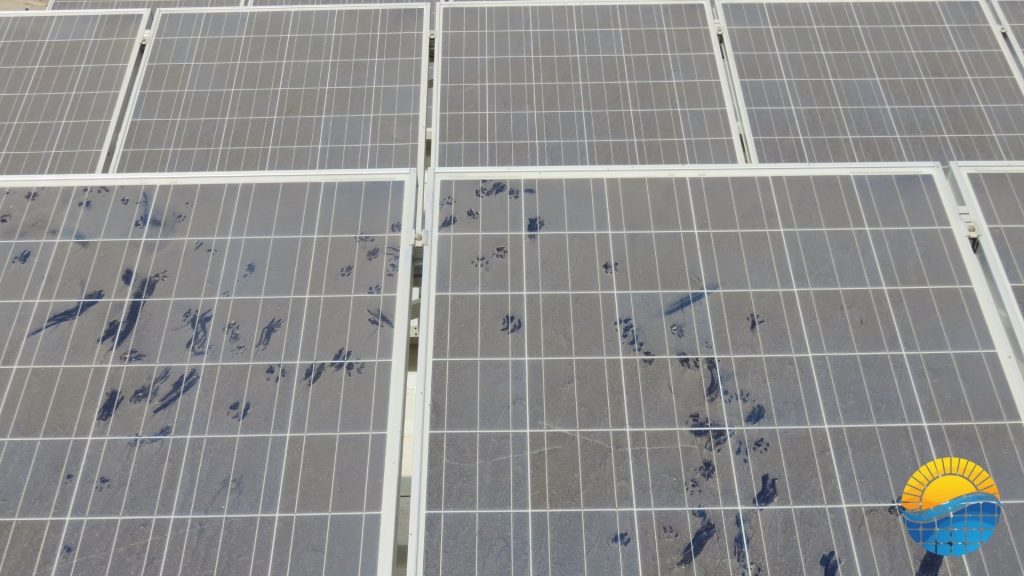
While the cost of cleaning is straightforward, the cost of neglect is insidious. It begins with a scientifically proven and measurable reduction in energy generation.
The Science of Soiling: More Than Just Dust
Soiling is any airborne material that accumulates on your panel’s surface, blocking or scattering sunlight before it can be converted into electricity. Research from the U.S. National Renewable Energy Laboratory (NREL) puts typical annual soiling loss at around 5% nationally, ranging from roughly 2% in wet climates to 7% where it is dusty or traffic-heavy. Desert and high-traffic sites can run higher still.
A common misconception is that rain is enough to keep panels clean. Scientific research has definitively debunked this “rain fallacy.”
- The Pollen Problem: A 2023 NREL study of four utility-scale plants in North Carolina found that rainfall was not enough to wash away sticky, adhesive pollen. Losses ran to about 10% over the year and as much as 15% at peak pollen season, and only a manual, mechanical cleaning restored the panels. That is a pollen-belt figure, not a national one — most U.S. systems sit nearer 5%.
- The Cementation Effect: In many climates, morning dew or light humidity can combine with dust to create a hardened, “cemented” layer on the panel’s surface. This grime bonds to the glass and is not washed away by rain.
What Is Actually Coating Your Panels?
To understand why soiling is such a formidable opponent, we need to look closer. The film on your panels is rarely just “dust.” It’s a complex, site-specific cocktail of contaminants, a veritable menagerie of grime, each with its own power-sapping properties.
1. Mineral Dust & Sand: In arid and semi-arid climates like the American Southwest, this is the number one culprit. Composed of fine silica and other minerals, these particles are whipped up by the wind and settle on your panels. The real trouble starts with morning dew. The moisture allows these particles to stick, and as the sun evaporates the water, it leaves behind dissolved minerals that act like cement, gluing the dust to the glass. This “caking” process creates a stubborn film that a light breeze or even a gentle rain shower can’t remove.
2. Biological Contaminants: Nature can be a messy business, and your panels are right in the thick of it.
- Bird Droppings: These are particularly nasty. Not only are they opaque, completely blocking the cells they cover, but they are also highly acidic. This uric acid can chemically etch the anti-reflective coating on your panels, causing permanent damage if not cleaned promptly.
- Pollen: Especially in verdant, humid regions like the Southeast, pollen is a major issue. It’s naturally sticky and highly adhesive. When it coats your panels, it forms a persistent yellow haze that is notoriously resistant to being washed away by rain.
- Fungi, Algae, and Biofilms: In warm, humid environments, your panels can become a breeding ground for fungi, lichen, and algae. These organisms create dark, discolored spots that block light and are incredibly difficult to remove. Worse, they act like organic velcro, trapping other dust and dirt particles and magnifying the overall soiling effect.
3. Anthropogenic & Industrial Pollutants: Human activity is a significant source of panel-degrading grime.
- Soot and Exhaust: If your home or business is near an urban center, industrial zone, or major highway, fine carbonaceous particles from engine exhaust and industrial processes settle on your panels. These dark particles are exceptionally good at absorbing sunlight, preventing it from ever reaching the solar cells.
- Agricultural Dust: In rural areas, seasonal activities like tilling and harvesting can kick up enormous clouds of dust, leading to severe, short-term soiling events that can slash your output overnight.
- Construction Dust: Cement dust from nearby construction is uniquely challenging. Its particles are abrasive, can become electrostatically charged (making them stickier), and can actually cure on the panel surface, requiring specialized cleaning agents to remove without scratching the glass.
Your Regional Soiling Profile: A Targeted Threat Assessment
Soiling is a highly localized threat. Identifying your home’s specific risk profile is the first step in assessing your needs.
- A) Desert and Arid Climates (e.g., U.S. Southwest): The primary threat is airborne dust and sand. The lack of rain means soiling accumulates unchecked. Annual energy losses of 5-7% are common, with some locations seeing much higher figures.
- B) Coastal Regions (e.g., Florida, California): The main issue is corrosive salt spray from the ocean. This creates a thin film that blocks sunlight and can corrode metal frames and mounting hardware over time.
- C) Agricultural Areas (e.g., U.S. Midwest): This is a mix of dust from tilling, pollen, and other organic materials. This soiling is often seasonal and intense, requiring strategically timed cleanings.
- D) Urban and Industrial Centers (e.g., U.S. Northeast): The threat here is soot, vehicle emissions, and industrial pollutants. These particles are often fine, sticky, and can have a greasy composition that adheres strongly to glass.
- E) The Pacific Northwest (e.g., Oregon, Washington): The odd one out. Dust loss here is the lowest in the country — around 2% — but the wet, shaded conditions grow what dust cannot: moss, lichen and algae, plus conifer needle litter and spring pollen off the Willamette Valley. None of that is a soiling percentage. It is an opaque mat that shades whole cells, holds moisture against the frame seals, and is the most common cause of hot spots we see in Oregon and Washington.
The NREL Soiling Map is an invaluable tool that provides location-specific data on annual energy loss percentages. By consulting this map, you can get a scientifically validated estimate of your baseline energy loss, turning a vague threat into a quantifiable risk.
The Hidden Cost of Neglect, Part II: Translating Lost Watts into Lost Dollars
Knowing your panels produce less energy is one thing. Quantifying that loss in dollars and cents is what truly matters for a financial asset.
The Simple Math of Lost Revenue
You can estimate your annual financial loss with a straightforward calculation:
Annual Financial Loss = (Annual System Production in kWh) × (Regional Soiling Loss %) × (Your Local Electricity Rate in $/kWh)
Let’s take a typical 6kW residential system that produces about 8,400 kWh per year. In an area with a moderate 7% soiling loss and an electricity rate of $0.20 per kWh, the loss is:
8,400 kWh × 0.07 × $0.20/kWh = $117.60
In this scenario, you’re losing nearly $118 in savings every year. Compared to a professional cleaning cost of $150-$250, the service can pay for itself in just over a year.
The Multiplier Effect: How High Electricity Prices Amplify Losses
The financial penalty for soiling is dramatically amplified in regions with high electricity costs. A 7% energy loss hurts your wallet much more in California than it does in North Dakota. This “multiplier effect” makes regular cleaning a financial necessity in many parts of the country.
| State | Residential rate (¢/kWh), May 2026 | Annual loss at 5% soiling | Annual loss at 7% soiling |
| Hawaii | 52.00 | $218 | $306 |
| California | 33.25 | $140 | $196 |
| New York | 29.93 | $126 | $176 |
| Massachusetts | 28.82 | $121 | $169 |
| Connecticut | 27.37 | $115 | $161 |
| U.S. average | 18.44 | $77 | $108 |
| Texas | 16.44 | $69 | $97 |
| Florida | 15.17 | $64 | $89 |
| North Dakota | 13.61 | $57 | $80 |
Rates: U.S. Energy Information Administration, Electric Power Monthly, Table 5.6.A, May 2026 (released 23 July 2026). Loss figures assume a 6 kW system producing 8,400 kWh a year. The 5% column is NREL’s typical annual soiling loss for U.S. systems; the 7% column is the top of its range, for dusty or traffic-heavy locations. Pollen-heavy regions run higher for part of the year — see below.
Rates are only half of it: what the same soiling costs you also depends on how much sun and how much dirt your roof sees. We track cleaner coverage and local conditions state by state in California, Texas, Florida, Oregon and Washington.
For homeowners in states like California, Massachusetts, and Connecticut, professional cleaning isn’t just recommended—it’s a critical financial strategy with a rapid and compelling payback.
Is Cleaning Worth It Where You Live? A City-by-City Verdict
National averages hide the answer, because the two numbers that decide it — what your power is worth and how dirty your air is — do not move together. Las Vegas has the worst soiling on this list and some of the cheapest electricity in the country. Seattle has almost no dust and a modest rate. Here is the honest arithmetic for a 10 kW system.
| City | Residential rate (¢/kWh) | Typical 10 kW output (kWh/yr) | Assumed annual soiling loss | Value of lost energy | Verdict against a $275 cleaning |
| San Diego, CA | 33.25 | 16,000 | 6% | $319 | Pays for itself in year one. |
| Los Angeles, CA | 33.25 | 15,500 | 6% | $309 | Pays for itself, narrowly. |
| Las Vegas, NV | 13.60 | 17,000 | 7% | $162 | About 20 months on energy alone — but the highest abrasion and hot-spot risk on this list. |
| Denver, CO | 16.16 | 15,500 | 5% | $125 | Roughly two years on energy alone. |
| Miami, FL | 15.17 | 14,000 | 5% | $106 | Weak on energy. The real case is algae and fungal growth that shades and etches. |
| Boston, MA | 28.82 | 12,500 | 3% | $108 | Weak on energy. Leaf litter and winter grime matter more than dust. |
| Seattle, WA | 14.95 | 10,000 | 2% | $30 | The energy case does not exist here. Moss and needle litter do. |
Rates are state residential averages from EIA Electric Power Monthly Table 5.6.A, May 2026. Output figures are typical regional yields for a fixed roof-mounted 10 kW array and will vary with tilt, orientation and shading — check NREL’s PVWatts for your own address. Soiling percentages sit inside NREL’s 2–7% national range, placed by local climate. $275 is a mid-range price for a 25–30 panel residential job.
Read the last column honestly: in five of these seven cities, one cleaning does not pay for itself on recovered energy inside a year. That is the part most cleaning companies leave out, and it is why the rest of this page is about the things a percentage cannot capture — bird droppings that etch coatings, moss that holds water against seals, and the warranty conditions that assume you maintained the array.
The Hidden Cost of Neglect, Part III: Permanent Damage and Warranty Invalidation
The most significant costs of neglect aren’t the lost dollars per month, but the potential for irreversible physical damage and the catastrophic financial risk of a voided warranty.
The Danger of “Hot Spots”: How Dirt Can Destroy Your Panels
A “hot spot” is a localized area on a solar panel that becomes dangerously overheated. It’s a direct consequence of soiling.
- Obstruction: A patch of dirt or a bird dropping blocks sunlight from reaching a cell.
- Current Mismatch: Healthy cells continue to generate current, forcing it through the underperforming soiled cell.
- Reverse Bias & Extreme Heat: The soiled cell acts like a resistor, dissipating this forced-through energy as intense heat. Temperatures can soar high enough to cause permanent damage.
This can lead to:
- Permanent cell degradation
- Cracking of the panel’s protective glass
- Melting of solder joints and burning of the backsheet
- In severe cases, a genuine fire hazard
Protecting Your Warranty: The High Cost of Improper Maintenance
You have two warranties, and cleaning affects both differently. The product warranty — typically 10 to 25 years depending on manufacturer — covers defects in the panel itself: delamination, junction-box failure, frame corrosion. The performance warranty is the longer one, usually 25 years, and guarantees the panel still produces a stated percentage of its rated output at the end of that term, commonly around 80% to 85%. Soiling damage attacks the first and masks the second: a hot-spotted panel is a product-warranty claim, while a panel that merely looks like it is underperforming because nobody has washed it will fail a performance test that a clean panel would pass. Neither warranty is unconditional. Manufacturers require proper installation and maintenance. Neglecting cleaning can have severe financial consequences.
If a panel fails due to a hot spot caused by soiling, the manufacturer can rightfully argue that the owner’s failure to perform basic maintenance has voided the warranty. This leaves you responsible for the full cost of replacement.
This creates a “catch-22” for the DIY approach. While neglecting cleaning is risky, cleaning your panels improperly can be just as bad:
- Using High-Pressure Washers: Can force water past seals, causing corrosion.
- Using Harsh Chemicals: Can damage the panel’s anti-reflective coating.
- Using Improper Tools: Abrasive brushes can create micro-scratches on the glass.
- Using Tap Water: Can leave behind light-blocking mineral deposits (limescale).
- Causing Thermal Shock: Spraying cold water on a hot panel can crack the glass.
Any of these mistakes can also lead to a voided warranty. This transforms the decision from, “Should I spend $200 to gain $100?” to, “Should I spend $200 to mitigate a multi-thousand-dollar replacement risk and protect my 25-year performance guarantee?“
The Professional Advantage: Mitigating Risk and Maximizing Returns
The evidence leads to one conclusion: professional solar panel cleaning is the safest, most effective, and most financially prudent strategy.
Risk/Benefit Analysis: DIY vs. Professional Cleaning
| Factor | DIY Approach | Professional Service |
| Upfront Cost | Low (supplies) | Moderate (service fee) |
| Personal Safety | High Risk (working at heights, electrical shock) | Low Risk (trained, certified, and insured) |
| Effectiveness | Low to Moderate (unlikely to remove all soiling types) | High (specialized equipment, deionized water) |
| Panel Damage Risk | High (thermal shock, scratches, chemical damage) | Very Low (manufacturer-approved methods) |
| Warranty Risk | High (improper methods can void warranty) | Very Low (provides proof of proper maintenance) |
| Inspection Value | None | High (can spot other issues like loose wiring or pests) |
Hallmarks of a Quality Service Provider
To ensure you get these benefits, choose a provider based on clear quality standards:
- Insurance and Certification: They must have liability insurance. Technicians should be trained in rooftop safety.
- Proper Equipment: They should use soft brushes, water-fed poles, and filtered or deionized water—never a high-pressure washer.
- Price Transparency: They should provide a clear, itemized quote with no hidden fees.
- Documentation: They should provide a receipt or service report, which is valuable for your records and warranty compliance.
- Positive Reviews and References: A track record of satisfied local customers is the best indicator of quality service.
The Future is Clean: Innovations in Automated and Self-Cleaning Technology
The challenges of solar maintenance are driving significant technological innovation aimed at reducing labor, conserving water, and improving efficiency. The future of panel cleaning is shifting from a reactive chore to a proactive, automated, and data-driven process.
The Rise of Automation: Robotic and Drone Solutions
For large-scale solar farms, waterless robotic cleaners are already a reality. Companies like Ecoppia have developed fully autonomous robots that traverse panel arrays nightly, using microfiber pads and controlled air-flow to remove dust without water. For residential and commercial systems, automated sprinkler-like systems are becoming more common. Solutions from companies like RST NightWash™ and Heliotex can be installed on an array and programmed to rinse the panels with filtered water on a set schedule, often controlled by a mobile app. For hard-to-reach installations, drone-based cleaning is an emerging technology, where drones use high-pressure air or minimal cleaning agents to service panels, though this is still in early commercial stages.
Surface Science: The Promise of Self-Cleaning Panels
Significant research is being poured into advanced coatings that reduce the need for cleaning in the first place. These technologies include:
- Hydrophobic/Anti-Soiling Coatings: These create an ultra-smooth surface that repels water and makes it difficult for dust and dirt to adhere, enhancing the natural cleaning effect of rain.
- Photocatalytic Coatings: These advanced nanotechnology coatings use the ultraviolet radiation in sunlight to trigger a chemical reaction that breaks down organic dirt, making it wash away more easily.
- Electrostatic Screens: This technology applies a small electrostatic charge to the panel surface, actively repelling dust particles before they can settle.
These technologies are moving from the laboratory to the marketplace, with some manufacturers beginning to integrate them into new panels and others offering them as aftermarket applications.
The Role of AI and Predictive Maintenance
The most transformative innovation may be the integration of artificial intelligence. AI-powered monitoring systems can analyze a panel’s real-time energy output and compare it against historical performance and local weather data. By doing so, they can accurately detect an efficiency drop caused by soiling and distinguish it from a drop caused by a cloudy day. This allows for predictive maintenance; instead of cleaning on a fixed, and often inefficient, schedule, the system can alert the owner or trigger an automated cleaning cycle at the precise moment it becomes most cost-effective, optimizing maintenance costs and maximizing energy yield.
These technological advancements are not just about convenience. They are a key enabler for the global expansion of solar power. In water-scarce desert regions, where soiling is most severe, the high cost and logistical difficulty of traditional, water-based cleaning can make a solar project financially unviable. Waterless robotic and automated solutions dramatically lower this operational expenditure, making solar a more bankable and attractive investment in the very locations where sunlight is most abundant.
Final Thoughts: An Essential Task for a High-Value Asset
Professional solar panel cleaning is not an optional expense but a critical, cost-effective maintenance strategy.
- It Increases Energy Production: By removing soiling, it recovers lost electricity generation, often paying for itself within a year.
- It Mitgates Risk: It prevents the formation of destructive hot spots that can cause permanent, catastrophic damage.
- It Protects Your Warranty: It provides documented proof of proper maintenance, safeguarding your long-term financial guarantee.
Your solar installation is a powerful financial engine. To protect your investment and ensure you’re capturing every dollar of savings you’re entitled to, the logical next step is to connect with a qualified expert.
Ready to maximize your solar savings and protect your investment? Use CleanMySolarPanels.com today to get free, no-obligation quotes from trusted, local solar panel cleaning professionals in your area.