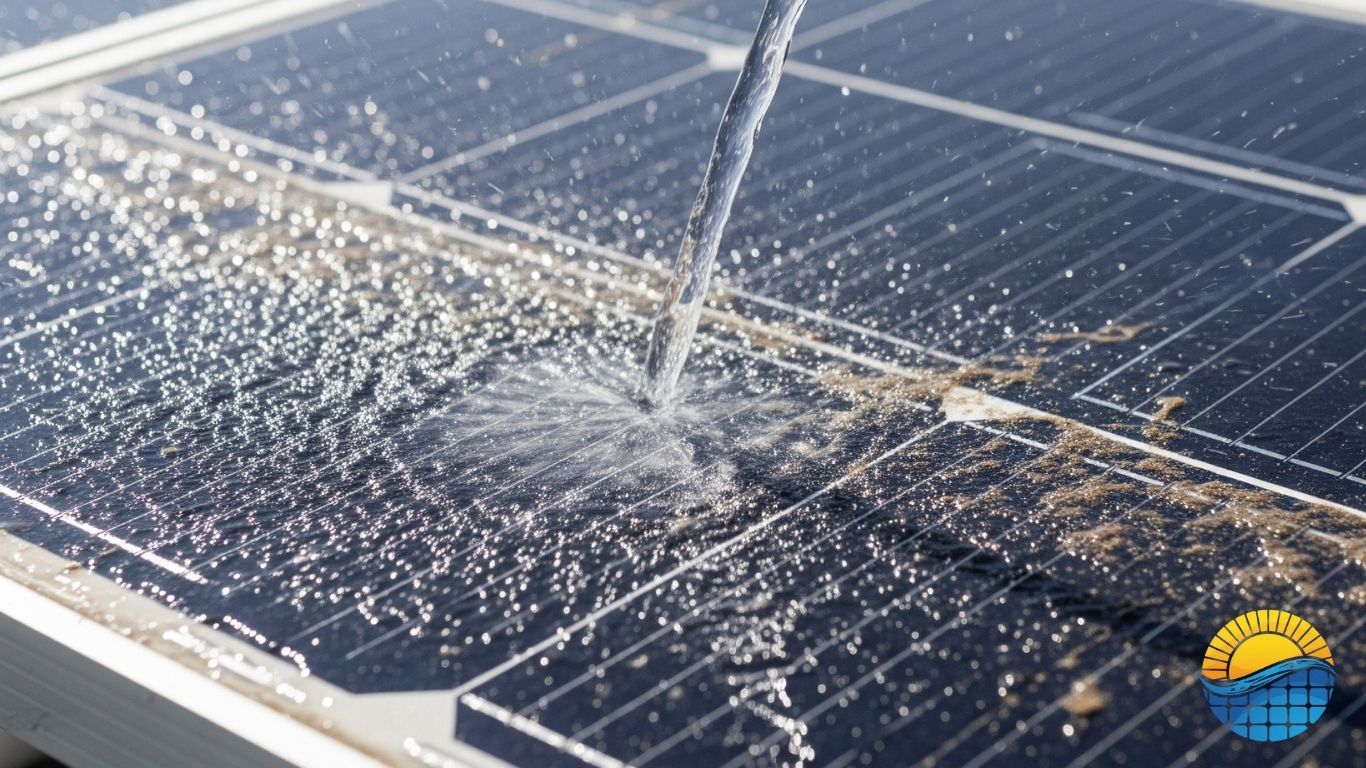
How To Clean Tree Sap Off Solar Panels (The Safe Way)
By Adam, Founder, CleanMySolarPanels · June 22, 2025
Tree sap comes off solar panels with dwell time, not force: soak the spot with isopropyl alcohol diluted below 10%, wait a few minutes, then lift it with a microfiber cloth. Never scrape it, never use acetone or a pressure washer, and work early while the glass is cool — the anti-reflective coating scratches easily, and that damage is permanent and never covered by warranty.
It's worth doing right, because sap isn't just ugly. NREL research identifies soiling from debris like sap as a primary cause of efficiency loss.
Below: the two types of sap and why they behave differently, the golden rules of panel cleaning, the exact process pros use, and the manufacturer warranty rules that decide what's allowed on your glass.
A Pro’s Advice on How to Clean Tree Sap Off Solar Panels
There are few things more frustrating than looking up at your expensive solar array and seeing it dotted with sticky, stubborn tree sap. It’s not just an eyesore; that sap is actively costing you money by blocking sunlight and reducing your system’s efficiency.
Your first instinct might be to grab a ladder and scrub it off. But stop right there. Cleaning tree sap from a solar panel is not like cleaning a car windshield. Using the wrong method can cause permanent damage, lower your energy production forever, and even void your multi-thousand-dollar warranty.
Here at CleanMySolarPanels.com, our goal is to help you protect your investment. As the leading directory for finding qualified solar panel cleaners, we’ve seen the costly mistakes that can happen. This guide will walk you through the science of sap, the right and wrong ways to deal with it, and why for a job this tricky, calling a professional is your safest bet.
Section 1: Why Sap is a Solar Panel’s Sticky Enemy
To understand how to clean sap, you first need to know what you’re up against. Not all tree sap is the same, and your solar panel’s surface is more delicate than it looks.
Two Types of Troublesome Sap
Tree sap generally falls into two categories, and they behave very differently.
- Sugary Saps: Common from trees like Maples and Birches. When fresh, this sap is mostly sugar and water, making it relatively easy to clean. The problem is that the sun bakes it, evaporating the water and caramelizing the sugars into a hard, dark, glassy substance that’s much tougher to remove.
- Resinous Saps: This is the super-sticky, water-repellent sap you get from conifers like Pines, Spruces, and Firs. Water is useless against it. This sap is the tree’s defense mechanism, and when the sun bakes it, it hardens into a tenacious polymer that clings to the panel surface.
Your Panel Isn’t Just Glass
The most critical mistake homeowners make is treating their solar panel like a simple sheet of glass. The outer layer has a microscopically thin Anti-Reflective (AR) coating. This amazing technology is designed to maximize the light that enters the panel, boosting its efficiency.
This AR coating is extremely fragile. It can be permanently damaged by:
- Abrasive Tools: Hard brushes, scouring pads, or scrapers will easily scratch and wear away the coating. Use a flagged-bristle soft brush instead.
- Harsh Chemicals: Aggressive solvents, ammonia (found in many glass cleaners), or bleach can chemically strip the coating right off.
Damage to the AR coating is irreversible, leads to a permanent loss of power, and is never covered by your warranty. According to research from institutions like the National Renewable Energy Laboratory (NREL), soiling from debris like sap is a primary cause of efficiency loss, making proper, safe cleaning essential.
Table 1: Quick Guide to Common Tree Saps
| Sap Type | Common Trees | Key Cleaning Challenge |
| Resinous Sap | Pine, Spruce, Fir | Water-proof and extremely sticky. Requires a specific solvent to dissolve. |
| Sugary Sap | Maple, Birch | Easy to clean when fresh, but heat turns it into a hard, baked-on caramel. |
| Gum | Mesquite | Forms a thick gum that requires soaking to rehydrate before it can be removed. |
Section 2: The Golden Rules of Solar Panel Cleaning
Before you even think about tackling sap, you need to know the universal rules for cleaning any solar panel. Breaking these rules is the fastest way to cause damage and void your warranty.
- Rule #1: Clean When Cool. REC Group puts it plainly in its cleaning guide: cleaning “should only be carried out when the panels are cool to avoid thermal shock,” ideally early morning and with water at ambient temperature. Never clean panels in the heat of the day. Spraying cool water on a hot panel can cause “thermal shock,” creating invisible micro-cracks in the solar cells and glass. Clean only in the early morning, late evening, or on a cool, overcast day.
- Rule #2: NEVER Use a Pressure Washer. The intense blast from a pressure washer can destroy the delicate AR coating, break the seals around the frame, and force water inside the panel, leading to electrical failure. Here is exactly what pressure washing does to solar glass.
- Rule #3: Use the Right Water. Tap water, especially hard water, leaves behind mineral spots that block sunlight. Professionals use purified (deionized or distilled) water because it cleans effectively and dries 100% spot-free.
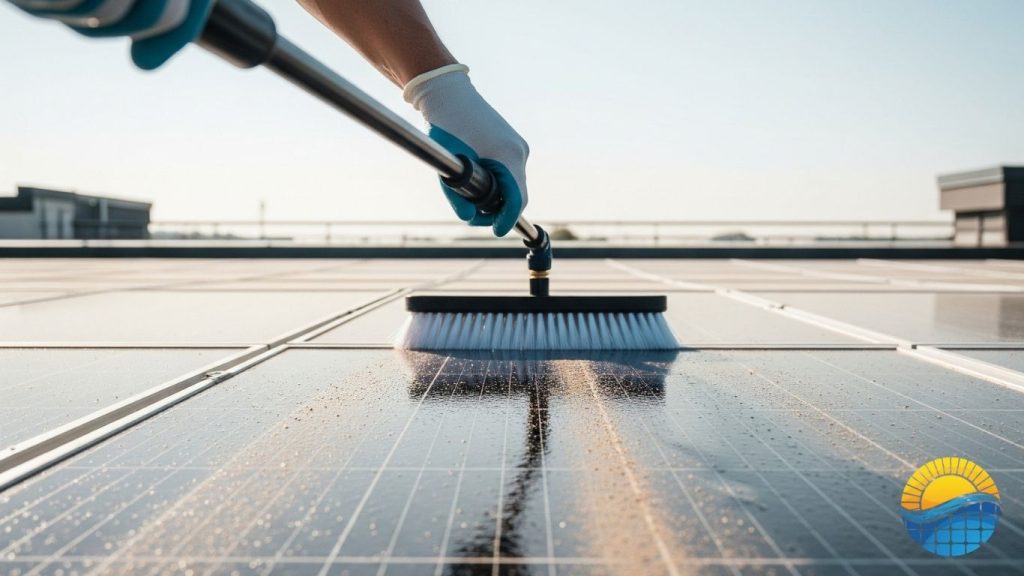
- Rule #4: Use Soft Tools Only. The only things that should touch your panel are a very soft-bristled brush (designed for solar panels) or a clean microfiber cloth.
- Rule #5: Avoid Soaps and Detergents. While some old guides mention dish soap, most major manufacturers now forbid it. Soap leaves behind a sticky film that actually attracts more dirt and reduces efficiency. If you need a cleaning agent for stubborn organic residue, use a pH-neutral cleaner made for solar glass.
- Rule #6: Safety First! A wet roof is incredibly slippery, and your solar system is always electrically live when there’s light out. For safety alone, it is always best to hire a trained and insured professional.
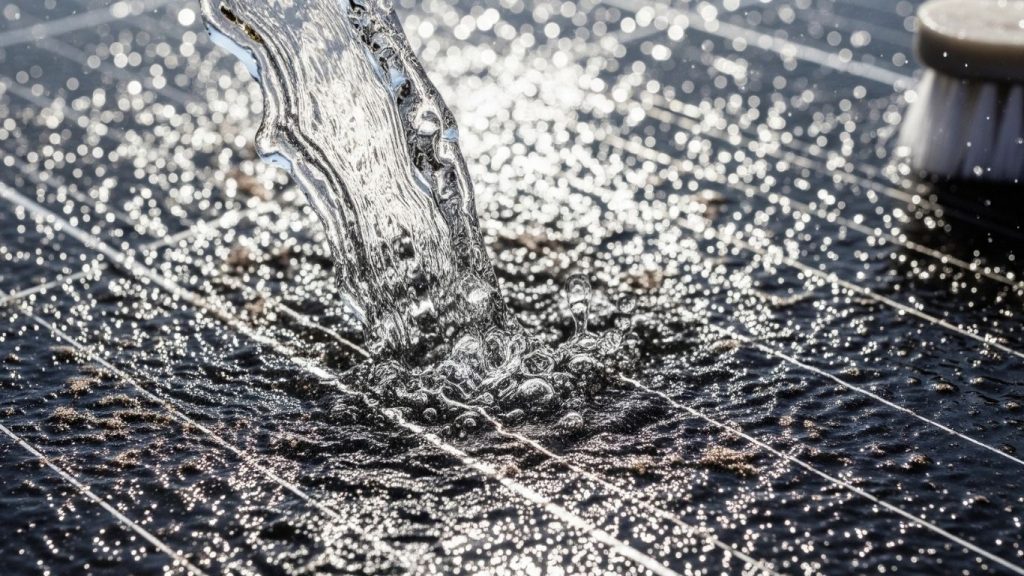
Section 3: How Professionals Safely Remove Tree Sap
When a simple water rinse won’t work, professionals follow a careful, multi-stage process to remove hardened sap without damaging the panel.
This is the process a trained professional would use. We do not recommend homeowners undertake this process due to the high risk of property damage and personal injury.
- Step 1: The Prep Rinse. The pro starts with a low-pressure rinse of pure, deionized water to remove any loose dust or grit that could scratch the panel.
- Step 2: The Solvent Soak (The Right Way). This is the most crucial step. A professional will use a very specific, warranty-approved solvent. The industry gold standard is Isopropyl Alcohol (IPA), heavily diluted. This is not a case where stronger is better: REC Group’s cleaning guide permits “IPA (Isopropyl Alcohol) with a concentration of less than 10%” on its panels, and the industrial-strength 70% to 99% isopropyl sold for degreasing sits well outside what most manufacturers allow near a module. Check your own manufacturer’s O&M document before you start, because the permitted concentration varies. They will apply the diluted IPA to a clean microfiber cloth (NEVER directly on the panel) and press the cloth onto the sap spot, letting it sit for a few minutes to dissolve the sap.
- Step 3: The Gentle Lift. Using the cloth, they gently rub in a circular motion to lift the dissolved sap. They never scrape or apply excessive force.
- Step 4: The Final Rinse. This is critical. They thoroughly rinse the entire area with deionized water to remove every trace of the solvent and dissolved sap, ensuring no residue is left behind.
What to Use vs. What to AVOID
| ✅ Safe & Pro-Approved | ❌ Dangerous & Prohibited |
| Deionized / Purified Water | High-Pressure Washer |
| <10% Isopropyl Alcohol (IPA) | Harsh Chemicals (Bleach, Ammonia) |
| Soft, Solar-Specific Brush | Abrasive Scouring Pads / Scrapers |
| Microfiber Cloths | Windex or other household cleaners |
| Professional Solar Cleaners | Automotive Bug & Tar Remover |
| Cooking Oil, WD-40, Acetone, Waxes |
Section 4: A Regional Guide to Dealing with Sap
The best strategy for dealing with sap depends on where you live.
- Northeast (Maples, Birches, Pines): You’ll face both sugary and resinous saps. A pro will try a water soak first for sugary sap but will need to use the IPA method for the sticky pine resin or baked-on maple sap.
- Southeast (Pines): This region is dominated by tough, baked-on pine resin. The professional IPA method is almost always the required starting point. Cleaning must be done in the very early morning to avoid the extreme heat.
- Pacific Northwest (Firs, Spruces, Maples): A mix of sticky resins and sugary saps. A pro will adapt their strategy, but given the number of large conifers, the IPA method is the most likely solution for stubborn spots.
- Southwest (Pines, Mesquite): Intense heat bakes sap on with extreme speed. The pro-level IPA method is the default. The “clean when cool” rule is absolutely critical here to prevent thermal shock.
Section 5: The Best Cure is Prevention
While a professional can safely clean sap, the best long-term strategy is to prevent it from getting on your panels in the first place.
The single most effective way to do this is strategic tree trimming. We strongly recommend hiring a certified arborist to safely remove branches that overhang or cast shadows on your array. A professional will know how to prune the trees properly without harming their health. The International Society of Arboriculture (ISA) offers a tool to find qualified arborists in your area, which is an excellent resource. The cost of hiring an arborist is often quickly paid back through reduced cleaning needs and, more importantly, increased energy production from eliminating shade.
Section 6: Don’t Gamble with Your Warranty
Your solar panel warranty is a contract. If you use improper cleaning methods and cause damage, the manufacturer can deny your claim, leaving you to foot the bill for repairs.
Different manufacturers have different rules, which makes compliance tricky.
Table 2: Quick Look at Manufacturer Cleaning Rules
| Manufacturer | Approved Cleaning Agent(s) | Strictly Prohibited |
| REC Group | Deionized water. Mild soap (secondary). <10% IPA (final resort). | High-pressure washers, steam, harsh detergents. |
| Silfab Solar | Commercial glass cleaner with isopropanol/ethanol. Gentle soap solution. | Blades, steel wool, harsh chemicals, pressure washers (>100 PSI). |
| Qcells | Recommends pro service. Allows selective use of Isopropyl Alcohol (IPA). | Abrasives, harsh chemicals. |
| Jinko Solar | Neutral water only (pH 6.0-8.0). | ALL chemicals. Using any chemical may void the warranty. |
| SunPower | Soft/distilled water, soft brush. | Hard water, walking on panels, improper methods that cause damage. |
This table is a simplified summary. Always refer to your specific manufacturer’s documentation.
The safest way to protect your warranty is to keep detailed records. If you hire a professional service, keep their receipts and service reports as proof of proper maintenance.
Final Thoughts: When in Doubt, Call a Pro
Removing tree sap from solar panels is a high-stakes job. It requires specific knowledge of chemistry, strict adherence to safety protocols, and an understanding of complex warranty documents. One small mistake with the wrong chemical or tool can lead to irreversible damage.
For a task this delicate and risky, the smartest and safest choice is to leave it to a trained professional. They have the right tools, the right training, and the right insurance to get the job done correctly, protecting your investment and ensuring your panels operate at peak performance for years to come.
Don’t risk your valuable solar asset. CleanMySolarPanels.com makes it easy to find a qualified and insured solar panel cleaning expert in your area who knows how to handle tough jobs like tree sap.
Click here to find a trusted professional cleaner near you and get your free quote today!
Would rather not do it yourself? Sap is one of the few jobs where a professional is almost always worth it — the solvent has to be right, the panel has to be cool, and the sap is usually on the part of the roof you can least safely reach. Compare vetted local cleaners in your area.