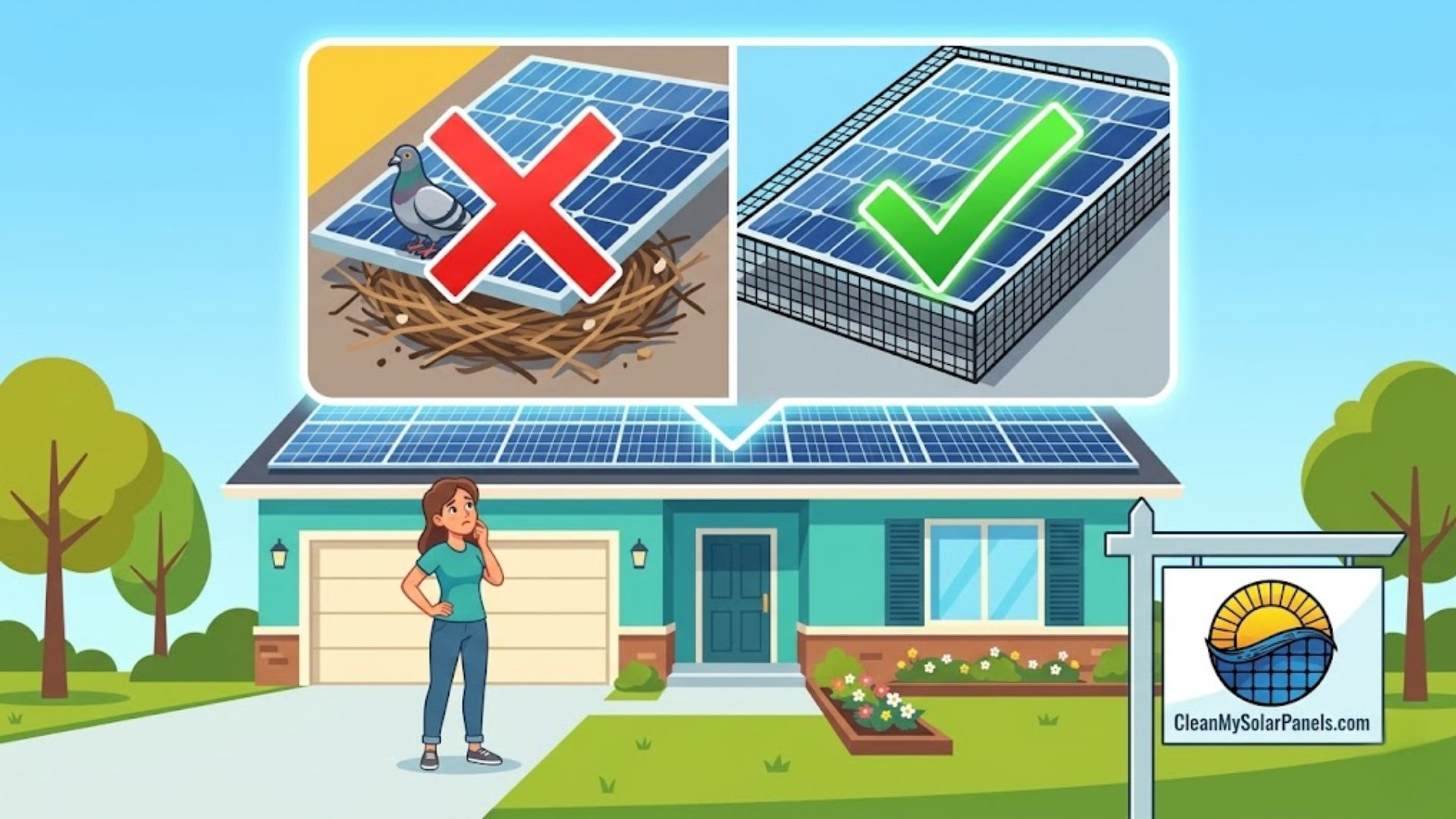
Birds & Solar Panels: How to Stop Pests from Ruining Your System
By Adam, Founder, CleanMySolarPanels · March 27, 2026
The proven way to stop birds and rodents from ruining your solar system is a professionally installed critter guard — a PVC-coated steel mesh sealing the gap under your panels, typically $500 to $1,500 installed. That flat fee is cheap insurance: once rodents chew your wiring or acidic droppings etch the glass, repairs easily run $2,000 to $5,000+.
The health angle is real too, not just scare talk. The CDC notes that Histoplasma grows in soil enriched by large accumulations of bird or bat droppings — and disturbing a dry nest is exactly how the spores go airborne.
Below: why birds love the space under your panels, the four ways they damage your system, and why DIY chicken wire usually voids your warranty.
Disclosure: some links in this article go to Amazon. If you buy through them we may earn a small commission at no extra cost to you. We do not sell pest-control hardware and no manufacturer pays for placement here.
Why Do Birds Love Solar Panels So Much?
To a pigeon or a squirrel, a rooftop solar array is the perfect habitat. Solar panels are typically mounted a few inches above the actual roof surface to allow for airflow and cooling. This small, shaded gap creates an irresistible environment for pests for three main reasons:
- Protection from the Elements: The panels act as a massive, waterproof umbrella, shielding nests from heavy rain, snow, and harsh winds.
- Protection from Predators: The gap between the panel and the roof is usually too narrow for larger predators (like hawks, owls, or neighborhood cats) to access, making it a perfectly secure nursery for baby birds.
- Warmth: Solar panels absorb a massive amount of heat from the sun. During cool nights or cold winters, the space beneath the panels radiates warmth, creating a cozy, heated shelter.
Once a flock of pigeons discovers this perfect habitat, they will not leave voluntarily. Pigeons are highly territorial and will return to the exact same nesting spot year after year.
4 Ways Birds and Pests Destroy Your Solar System
Having a few birds on your roof might sound like a minor nuisance, but it is actually a severe financial and safety hazard. Here is exactly how pests ruin your system:
1. Acidic Bird Droppings (The Efficiency Killer)
Birds naturally relieve themselves near their nests. When a flock lives under your panels, the top of the glass quickly becomes caked in highly concentrated bird droppings.
Unlike standard dust, bird guano is highly acidic. If left uncleaned, this acid will literally etch into the delicate anti-reflective coating of your solar glass. Not only does this permanent damage drastically reduce your panel’s efficiency, but the localized shading also creates electrical “hotspots” that can burn out the internal cells. To understand the financial impact of this, read our guide on the true cost of a dirty solar panel.
2. Chewed Wiring and Fire Hazards
It isn’t just birds; squirrels and roof rats frequently nest under panels, too. Rodents have a biological need to constantly gnaw on things to file down their teeth. The exposed wires connecting your solar panels are wrapped in soy-based insulation, which rodents actually find appetizing.
If a squirrel chews through the protective casing of your solar wiring, it exposes live, high-voltage electrical currents. This is an extreme fire hazard that can ignite the dry twigs and leaves the pests have dragged under the array.
3. Roof Rot and Water Damage
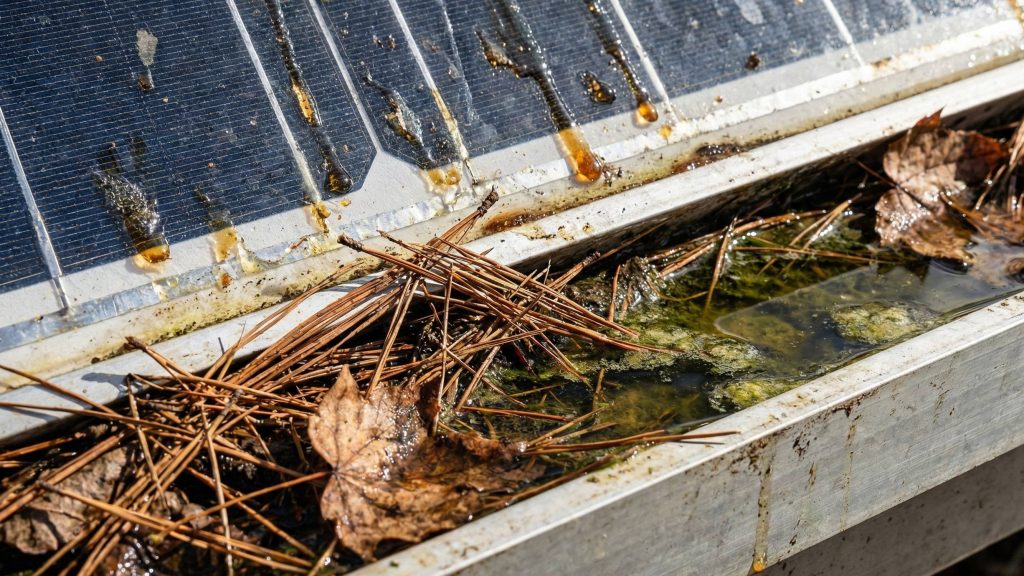
When birds build nests, they drag massive amounts of twigs, leaves, trash, and debris under your panels. Over time, this debris dams up the natural flow of rainwater down your roof.
Instead of flowing into your gutters, the water pools around the mounting brackets of your solar panels. This constant moisture will eventually rot your roofing shingles, compromise the waterproof seals, and cause devastating leaks inside your attic and living room. For more details on what happens under your array, check out our guide on how to clean under solar panels.
4. Severe Health Hazards
Pigeon and starling droppings can carry the fungi behind histoplasmosis and cryptococcosis. The CDC notes that Histoplasma grows in soil enriched by large accumulations of bird or bat droppings and that the risk comes from disturbing that material and breathing the spores — which is exactly what sweeping a dry nest off a roof does. Most people who inhale them never get sick; the risk is meaningfully higher if you are immunocompromised. When these droppings dry out, the spores become airborne and can easily be sucked directly into your home’s HVAC system. Furthermore, bird nests are crawling with secondary pests like bird mites, ticks, and fleas, which can quickly migrate through your roof vents and infest your home.
The Solution: Critter Guards and Bird Mesh
If you already have a pest problem, or if you want to proactively prevent one, the absolute best industry-standard solution is installing Critter Guards or Bird Mesh.
Bird proofing involves installing a heavy-duty, PVC-coated galvanized steel mesh completely around the perimeter of your solar array. This mesh physically blocks birds and rodents from accessing the gap between the panels and the roof, while still allowing for the vital airflow required to keep your panels cool.
Why Are Critter Guards So Important?
- Fire Prevention: They physically block rodents from accessing and chewing on your high-voltage solar wiring.
- Roof Protection: By keeping nesting materials out, they allow rainwater to flow freely to your gutters, preventing pooling water and roof rot.
- Disease Control: They eliminate the accumulation of toxic bird droppings and the secondary pests (like mites) that live in bird nests.
- Aesthetic Appeal: Modern critter guards are sleek, black, and blend seamlessly into the shadow of your solar panels, making them virtually invisible from the street.
The Economics: Installation Price vs. Potential Losses
Is the upfront cost of bird mesh worth it? Let’s look at the financial reality of your investment.
- The Price to Install: Depending on the size of your array, roof pitch, and location, having a professional install a high-quality critter guard typically costs a flat fee between $500 and $1,500.
- The Cost of Inaction (Losses): If rodents chew through your main wiring harness, or acidic bird droppings permanently etch your glass, repairs easily skyrocket to $2,000 to $5,000+. Add in the cost of repairing roof rot or hiring an exterminator for a bird mite infestation, and the financial losses become astronomical.
Installing bird mesh is essentially a one-time insurance policy that protects your multi-thousand-dollar solar investment from catastrophic biological damage.
Product Links: What Do the Pros Use?
While we highly advise against DIY installation due to the severe risk of voiding your warranty (more on that below), many homeowners want to see exactly what materials the professionals use to protect their homes. High-quality kits feature PVC-coated wire and specialized non-penetrating aluminum fasteners.
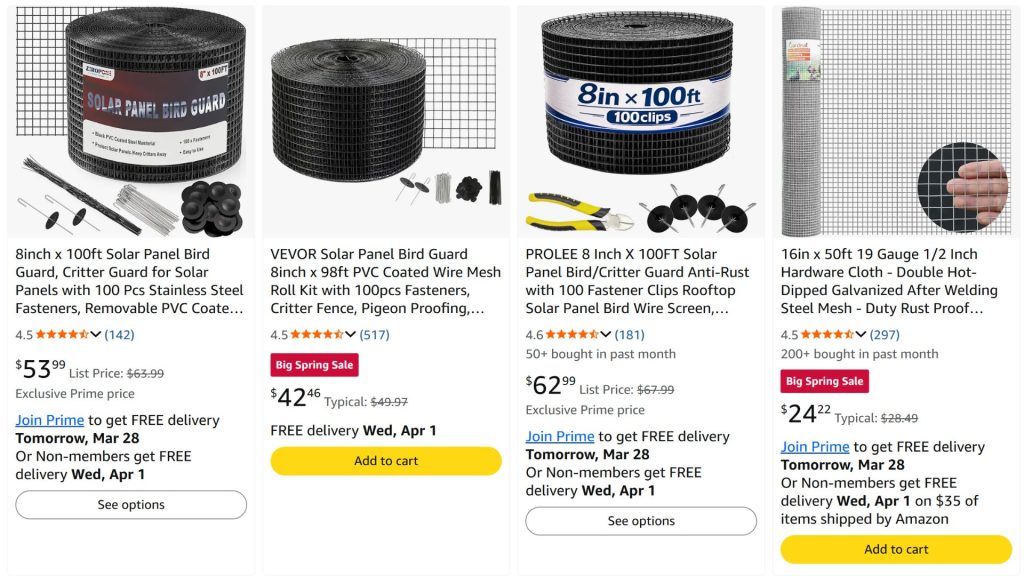
🛒 View Solar Panel Critter Guard Kits on Amazon
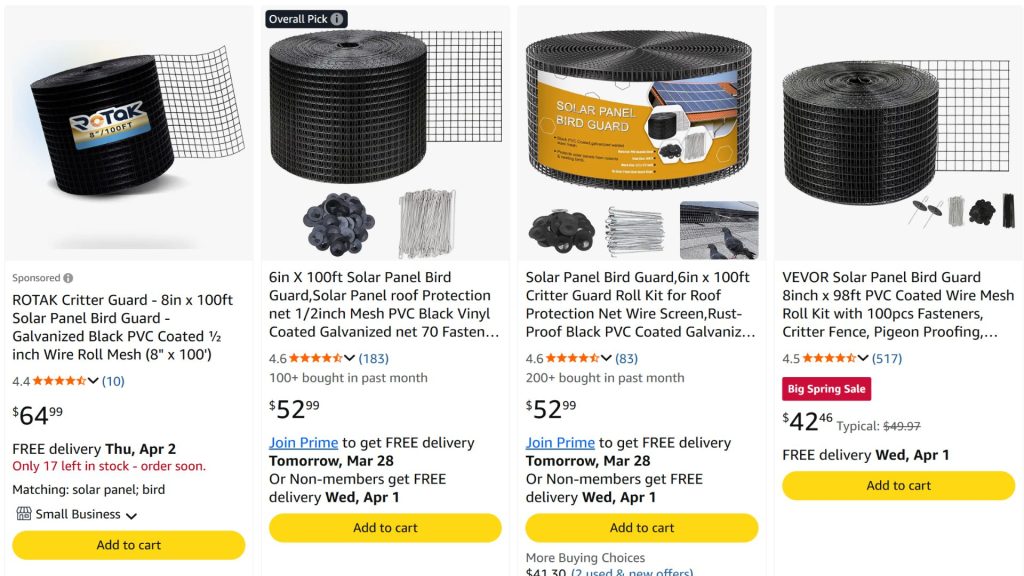
🛒 View Heavy-Duty Solar Bird Mesh on Amazon
How It Works (The Safe Way)
When a professional installs a critter guard, they follow a very specific, warranty-approved process:
- Eviction and Cleanup: First, the crew identifies what is actually nesting up there — because this is where a DIY job can become a federal offence. Rock pigeons, European starlings and house sparrows are not protected by the Migratory Bird Treaty Act, so their nests can be removed. Almost every other wild bird in the United States is protected. Grackles, finches, swallows and every sparrow other than the house sparrow are covered, and disturbing an active nest holding eggs or chicks without a federal permit is a violation regardless of intent. A qualified installer identifies the species first and, where the nest is protected, waits until the young have fledged before sealing the array. If you cannot tell which bird you are looking at, that alone is reason to call someone who can. They then perform a massive deep clean, pulling out all the highly combustible nesting debris, twigs, and leaves from under the panels.
- Sanitization: They safely wash away the corrosive bird droppings and sanitize the roof to kill any lingering bird mites or hazardous fungal spores.
- Mesh Installation: Finally, they wrap the entire perimeter of the array in the galvanized steel mesh using approved, safe clips.
The Danger of DIY Bird Proofing
Many budget-conscious homeowners look at bird mesh and think, “I can just buy some chicken wire from the hardware store and zip-tie it up there myself.”
This is a massive mistake that usually results in voided warranties and wasted money. Here is why you should never attempt to bird-proof your panels yourself:
- The “Drilling” Disaster: The single most common DIY mistake is using screws or drills to attach the mesh directly to the aluminum frame of the solar panel. The moment you drill a hole into a solar panel frame, your 25-year manufacturer warranty is instantly and permanently voided. Professional installers use specialized, non-penetrating aluminum clips that hold the mesh firmly in place without altering the panel.
- Cheap Materials: Standard chicken wire or untreated metal mesh will rust after a single rainy season. The rust will bleed down your roof, staining your shingles permanently. Professional PVC-coated mesh is weather-proof and designed to last for decades.
- The Safety Risk: Cleaning out hazardous, disease-ridden pigeon nests while balancing on a slanted, two-story roof is incredibly dangerous. Slips and falls are common, and disturbing live, high-voltage wires hidden in the nests can be lethal.
If you are still wondering if ignoring the problem is an option, you should read our breakdown on how bad it is if you don’t clean your solar panels.
DIY vs. Professional Bird Proofing: A Comparison
To put this into perspective, here is a quick look at why relying on a local expert is the only smart choice for protecting your roof:
| Feature | DIY Chicken Wire Attempt | Professional Critter Guard |
| Material Quality | Rusts quickly; stains roof | PVC-coated galvanized steel (weather-proof) |
| Warranty Status | Instantly Voided if you drill or screw into frames | 100% Protected (Pros use non-penetrating clips) |
| Debris Removal | Hazardous exposure to toxic bird droppings and mites | Safe, sanitary removal and roof disinfection |
| Visual Aesthetics | Looks messy, uneven, and highly visible from the street | Sleek, black mesh that blends invisibly into the panels |
| Effectiveness | Squirrels can easily chew through cheap plastic zip-ties | Permanent, impenetrable barrier against all pests |
Why You Should Rely on CleanMySolarPanels.com
Dealing with a pest infestation is stressful enough without having to worry about voiding your solar warranty or falling off a ladder. You bought solar panels to make your life easier and save money, not to start a war with local wildlife.
That is exactly why CleanMySolarPanels.com exists. We are your ultimate matchmaker in the solar industry. We make it incredibly easy to find qualified, insured, and highly-rated solar cleaning and bird-proofing professionals right in your specific neighborhood.
These local experts already own the specialized, warranty-safe clips, the high-grade PVC mesh, and the necessary safety equipment to evict your unwanted tenants permanently.
Evict the Pests and Protect Your ROI
Your solar panels represent a massive, exciting investment in your home’s future. Don’t let a flock of pigeons turn your expensive technology into a hazardous nesting ground.
- Don’t let acidic bird droppings permanently destroy your anti-reflective glass.
- Don’t let rodents chew through your exposed electrical wiring and create a fire hazard.
- Don’t risk voiding your warranty by screwing cheap chicken wire into your panels.
Treat your solar array like the high-yield financial investment it is. Take the risk and the hassle out of solar maintenance. Find a trusted, highly-rated solar bird-proofing pro in your area and secure your system today.