Do You Need to Turn Off Solar Panels to Clean Them?
By Adam, Founder, CleanMySolarPanels · April 27, 2026
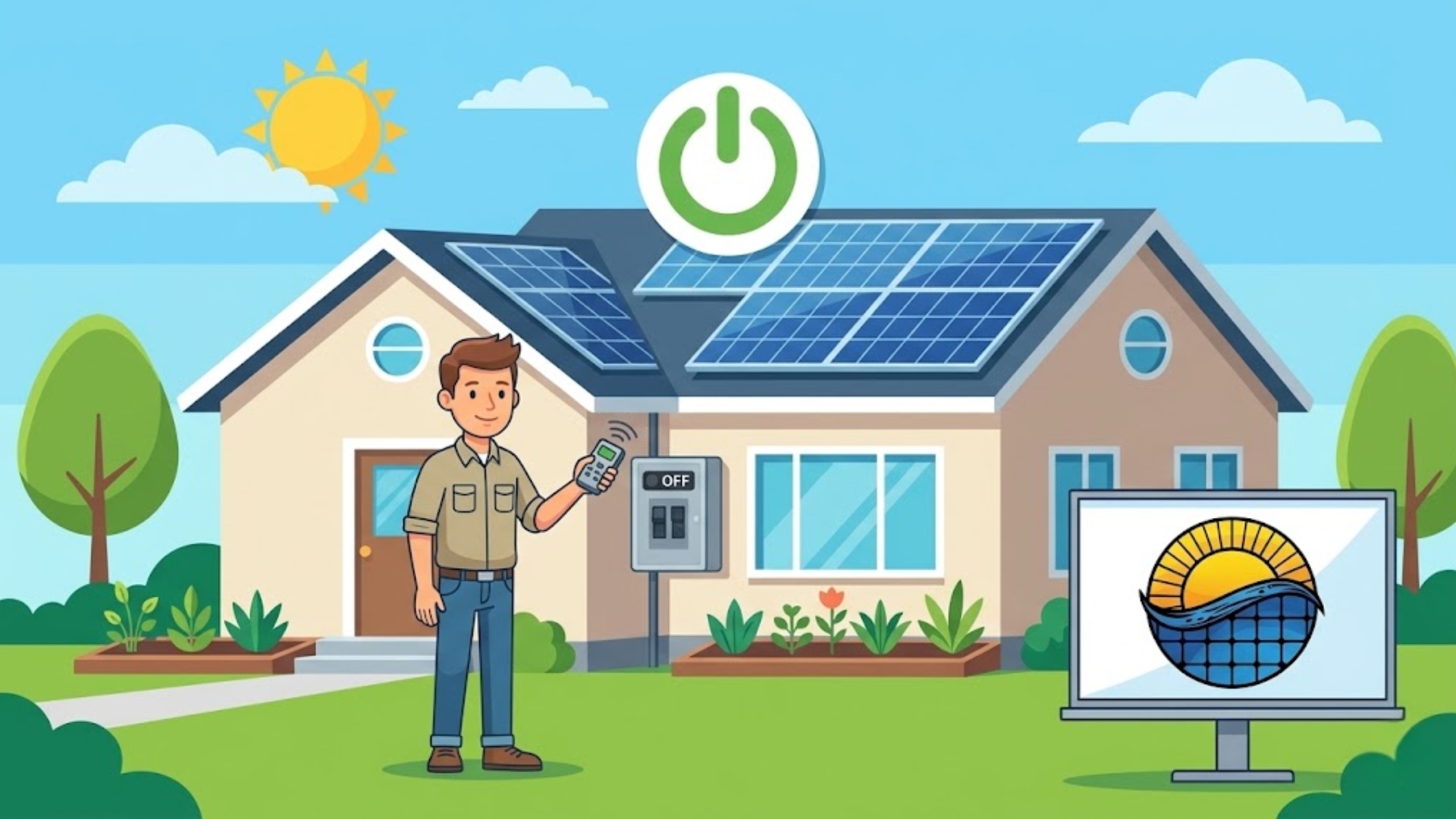
Yes — always shut your solar system down before cleaning it. Panels generate live DC voltage whenever light hits them, and washing an active array carries three real risks: electrical shock, thermal shock, and a voided warranty. The thermal risk alone is dramatic — on an 85°F afternoon a working panel's glass can hit 150°F to 170°F, and a blast of cold hose water can shatter it.
One caveat worth knowing up front: flipping the breaker and disconnects isolates the array from your house, but it does not switch the panels off. Treat everything on the roof as live until the sun goes down.
Below: the three risks of cleaning live panels, the exact shutdown sequence, the safest times of day to work, and how professionals handle it.
3 Massive Risks of Cleaning “Live” Solar Panels
Solar panels are built to withstand heavy rain, snow, and hail. They are hermetically sealed and highly weather-resistant. Because of this, many DIY homeowners assume that spraying them with a hose while they are turned on is perfectly safe.
However, washing a panel on a sunny afternoon introduces three severe risks that a natural rainstorm does not: Electrical Shock, Thermal Shock, and Voided Warranties.
Risk 1: The Invisible Electrical Hazard
When your system is active, electricity is constantly flowing from the panels, through the wiring harness, and down to your inverter. While the system is heavily insulated, that insulation does not last forever.
Over the years, the waterproof silicone seals around your panel frames can degrade due to intense UV exposure. More dangerously, local wildlife (like squirrels and roof rats) love to nest under the warm panels and chew on the soy-based casing of your electrical wires.
If you are standing on a wet roof or cleaning solar panels from the ground with a water-fed pole, and that water seeps into a micro-crack or touches an exposed, chewed wire, the water becomes an immediate electrical conductor. The risk of a severe, potentially fatal electrical shock is simply not worth the few minutes it takes to flip the off switch.
Risk 2: Thermal Shock and Shattered Glass
Even if your wiring is in pristine condition, cleaning live panels in the middle of the day introduces the immense risk of thermal shock.
Solar panels are incredibly efficient at absorbing heat. On a standard 85°F summer afternoon, the dark glass of a functioning solar panel can easily reach scorching temperatures of 150°F to 170°F. If you hit that superheated glass with a sudden blast of cold groundwater from your garden hose, the rapid change in temperature causes the glass to contract violently.
This violent contraction can cause the tempered glass to instantly shatter into thousands of pieces. A shattered panel produces zero electricity and becomes an immediate fire hazard.
Risk 3: Manufacturer Warranty Voidance
Top-tier solar manufacturers (such as SunPower, Tesla, and Qcells) provide extensive 25-year warranties, but those warranties come with strict maintenance guidelines. Virtually all major manufacturers explicitly state in their manuals that any maintenance or cleaning must be performed while the system is completely powered down. If a technician inspects a failed, water-logged, or shattered panel and determines the system was active during a DIY cleaning, your warranty claim will be denied immediately.
Understanding Your System: String vs. Microinverters
Before you start flipping switches, it is helpful to know what kind of solar system you have, as this dictates how the power flows through your home.
- String Inverters: In this older but common setup, all your panels are wired together in a “string” and send high-voltage DC electricity down to one large central inverter box on the side of your house. Shutting off the central disconnect stops the flow to the house, but the wires on the roof between the panels remain highly energized.
- Microinverters: In this modern setup (commonly made by Enphase), there is a tiny inverter mounted underneath every single panel. These instantly convert the power to safer AC electricity right on the roof. Shutting off the main disconnect stops the entire flow much more comprehensively.
Regardless of which system you have, the shutdown process at the main electrical panel remains your primary safety mechanism.
How to Safely Turn Off Your Solar Panels
If you have decided to take the smart route and shut your system down before a wash, the process must be done in a specific sequence to prevent electrical arcing.
While every setup is slightly different based on local building codes, here is the standard, step-by-step process to power down your array safely.
The Solar Shutdown Sequence
| Step | Component | Action Required | Pro Safety Tip |
| Step 1 | Main Electrical Panel | Locate the breaker labeled “Solar” or “Photovoltaic” in your home’s main breaker box and flip it to OFF. | Make sure your hands are completely dry before touching the main breaker panel. |
| Step 2 | AC Disconnect Box | Find the grey metal box outside (usually near the meter) with a red lever. Pull the lever firmly to the OFF position. | This physically breaks the circuit between the solar inverter and your home. |
| Step 3 | DC Disconnect (If Applicable) | If you have a central string inverter, locate the DC switch on the bottom or side of the inverter box and turn it to OFF. | Note: Microinverter systems generally do not have a DC disconnect. |
| Step 4 | Wait 5 Minutes | Step back and wait at least 5 minutes before applying any water to the roof. | This allows the capacitors in the inverter to fully discharge any stored electricity. |
One thing this sequence does not do: it does not switch the panels off. Solar cells generate DC voltage whenever light falls on them. Flipping the breaker, the AC disconnect and the DC disconnect isolates your array from the house and from the inverter — it does not de-energise the modules or the wiring inside the array boundary. Under the National Electrical Code (NEC 690.12(B)(2)), rapid shutdown equipment limits conductors inside that boundary to 80 volts or less within 30 seconds, which is a survivability threshold for firefighters — not an “it is safe to handle” threshold. Treat every panel, connector and cable on that roof as live until the sun goes down. A home battery does not change this either: putting a Powerwall into standby stops the battery discharging, it does not de-energise the PV array above it.
What if I Have a Solar Battery (Like a Powerwall)?
If your home is equipped with a solar battery backup system, shutting off the AC disconnect might cause your home to instantly switch over to battery power. If you have a battery, you must also locate the secondary disconnect switch specifically wired between the battery and the solar panels, or use your manufacturer’s smartphone app to put the system into “Standby” or “Off-Grid” mode before cleaning.
The Best Time of Day to Clean Panels
Even with the system powered down, you must be strategic about when you clean. Because of the thermal shock risk mentioned earlier, you should never clean solar panels in the middle of a hot afternoon.
The absolute safest times to clean your solar panels are:
- Early Morning (6:00 AM – 8:00 AM): The panels have cooled down overnight, the sun is low, and the morning dew has already started to loosen the dirt.
- Overcast Days: A heavily clouded day naturally keeps the panels cool and reduces the amount of active electricity being generated by the cells while you work.
The Dangers of DIY: Why a Hose Isn’t Enough
Once you’ve safely turned off your system, you might be tempted to grab a bucket of soapy water and your garden hose. However, we strongly advise against this.
While turning the system off mitigates the electrical and thermal shock risks, standard tap water presents a new, highly destructive problem: Hard Water Scaling. Municipal tap water is filled with dissolved minerals like calcium and magnesium. When you spray this water onto your panels, the water eventually evaporates, but the minerals do not. They bake onto the glass, leaving a chalky white film. This mineral scale creates a permanent physical barrier that blocks sunlight, creating the exact same “soiling loss” you were trying to fix in the first place!
To understand exactly how these mistakes impact your wallet, take a look at our visual breakdown in the real cost of not cleaning panels infographic. By ignoring proper maintenance protocols, you are quite literally throwing away the free energy you already paid to generate.
How the Professionals Do It Safely
If you want to learn how to clean solar panels like a pro, you have to look at the specialized tools they use.
When you hire a verified local professional, they don’t use garden hoses or dish soap. Instead, they use Deionized (DI) Water Systems.
Professionals run tap water through a specialized filtration tank that strips out 100% of the dissolved minerals. They then pump this pure water up through lightweight, water-fed carbon fiber poles attached to ultra-soft-bristle brushes. Because the water is completely pure, it acts as a magnet for dirt. The technician gently scrubs the panels, and the pure water rinses the grime away. The panels are left to air dry completely spotless and streak-free.
Most importantly, professional cleaners are fully insured, OSHA-trained for roof safety, and deeply understand how to properly shut down and inspect your specific inverter and battery systems before a drop of water ever touches the glass.
Why You Should Rely on CleanMySolarPanels.com
At the end of the day, climbing onto a slanted roof to wrestle with heavy, wet cleaning equipment is incredibly dangerous and time-consuming. Navigating electrical disconnect boxes, inspecting chewed wires, and sourcing purified DI water turns a simple weekend chore into a high-stakes hazard.
You bought solar panels to make your life easier and save money, not to add a dangerous job to your schedule. That is exactly why CleanMySolarPanels.com exists.
We act as your ultimate, unbiased matchmaker in the solar industry. We make it incredibly easy to find qualified, insured, and highly-rated solar cleaning professionals right in your specific neighborhood. We connect you with the very best local experts so you don’t have to waste hours searching the internet, reading questionable reviews, or guessing who to trust with your expensive equipment.
Protect Your System, Protect Yourself
Your solar panels represent a massive financial investment in your home’s future. While it is entirely possible to turn off your system and attempt a DIY wash, the risks of hard water damage, voided warranties, and severe physical injury are simply too high.
When you break down the low flat-fee of a professional cleaning and compare it to the expensive reality of replacing a shattered, thermally-shocked panel, the math becomes undeniable. Regular, professional cleanings protect your warranty, ensure electrical safety, and guarantee your system is performing at its absolute peak year-round.
Don’t risk your safety for a clean roof.
Leave the high-voltage equipment and the ladders to the experts. Find a trusted, highly-rated solar cleaning pro in your area and secure the best price today.