Can I Use Car Wash Soap on Solar Panels? The Ultimate DIY Warning
By Adam, Founder, CleanMySolarPanels · May 11, 2026
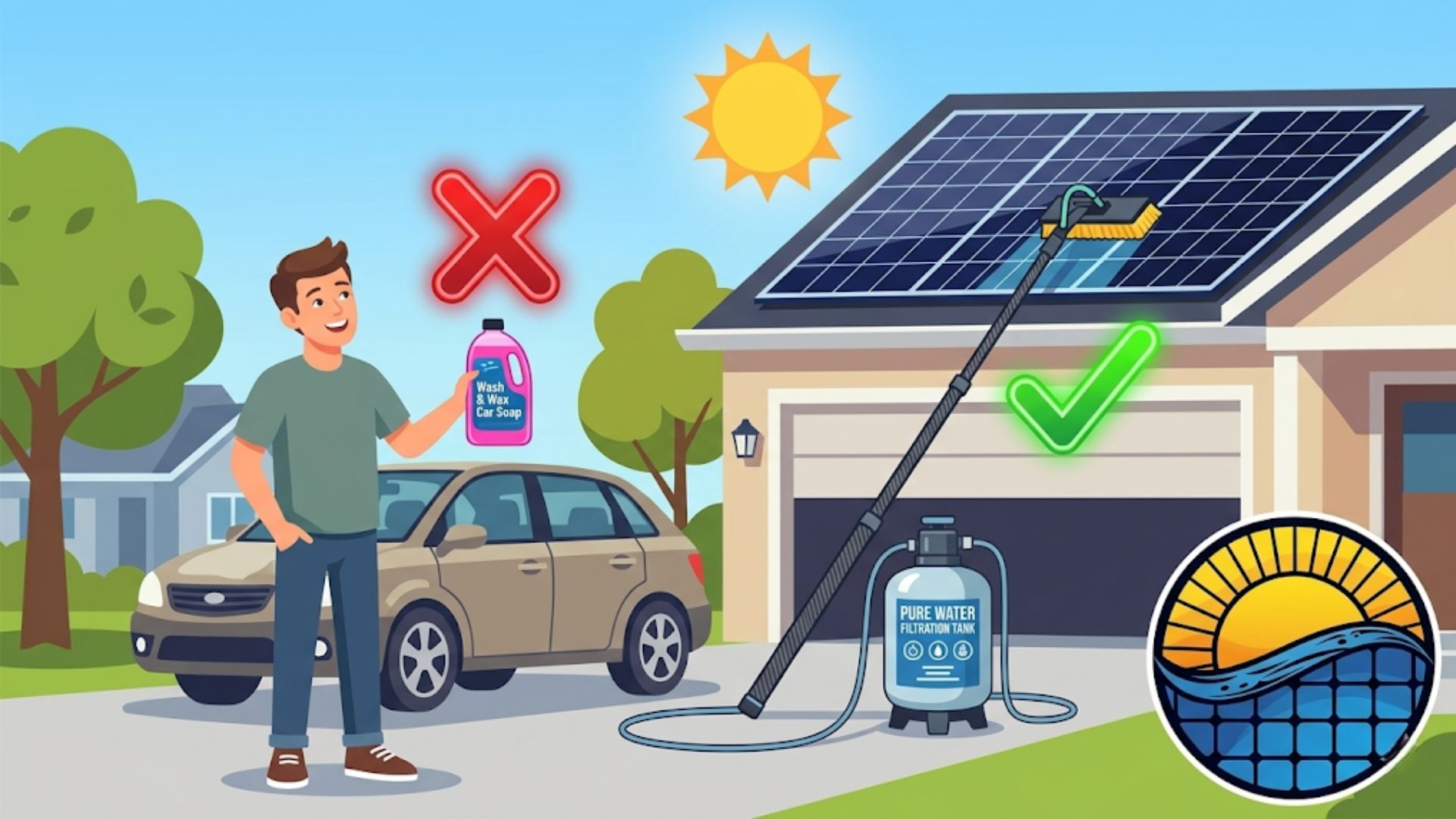
No — car wash soap belongs on your car, never on your solar panels. Most automotive soaps are "wash and wax" formulas built to leave carnauba wax or synthetic polymer sealants behind. On paint, that film protects; on glass that has to transmit light, it blocks output, turns sticky in the heat so panels grime up twice as fast, and violates the "improper maintenance" clauses in every major manufacturer's 25-year performance warranty.
The safe route is deionized water plus a pH-neutral, zero-residue solar cleaner — though a proper DIY kit runs $400 and $700 upfront, while hiring a local pro typically costs a flat $150 to $250.
Here's the chemistry behind the damage, how to spot existing wax buildup, and what to use instead.
The Chemistry Clash: Automotive Paint vs. Solar Glass
To understand why cleaning solar panels with car soap is so destructive, you have to understand the completely opposite goals of automotive engineering versus solar engineering.
The Goal of Car Paint
The clear coat on your vehicle is designed to protect the metal frame from the harsh elements. Automotive engineers want the sun’s harsh UV rays to bounce off the paint so the color doesn’t fade. They want water to bead up and roll away. Therefore, automotive soaps are chemically formulated to leave behind a microscopic layer of protection—waxes, synthetic polymers, and ceramic sealants—that shield the car from the sun.
The Goal of Solar Glass
Solar panels have the exact opposite mission. A solar panel is designed to absorb as much of the sun’s UV radiation as physically possible. The top layer of a solar panel is a piece of tempered glass that has been treated with a highly sensitive, microscopic anti-reflective coating. This coating prevents sunlight from bouncing away, trapping the light and pulling it down into the photovoltaic cells beneath.
When you put a product designed to reflect the sun onto a product designed to absorb the sun, the results are financially disastrous.
The Danger of “Wash and Wax” Formulas
Walk into any auto parts store, and you will notice that most premium car wash soaps on the shelf proudly advertise that they contain “Carnauba Wax,” “Synthetic Polymers,” or “Ceramic Protectants.”
These additives are fantastic for making your car’s hood shine, but they are the absolute worst thing you can put on a photovoltaic solar panel. Here are the three ways these automotive protectants ruin your solar investment:
1. The Opaque Film (Immediate Efficiency Loss)
When you wash your panels with car soap, the water evaporates, but the wax does not. The soap leaves behind a thin, invisible, waxy film across the entire surface of the solar array. While this film might make the glass look shiny to the naked eye, it acts as an opaque, reflective barrier to the actual solar cells.
By applying car wax to your panels, you are intentionally blocking the sunlight from reaching the cells. This can cause an immediate, highly noticeable drop in your daily energy production.
2. The “Sticky” Residue Effect
This is where the long-term damage occurs. The wax and synthetic polymers left behind by car soap are naturally tacky, especially when they heat up under the scorching afternoon sun.
This sticky film turns your expensive solar panels into a massive magnet for airborne debris. Standard windblown dust, sticky spring tree pollen, urban smog, and wildfire ash will stick directly to the waxy residue. If you thought your panels were getting dirty quickly before, washing them with car soap will cause them to accumulate a thick, muddy layer of grime twice as fast.
3. Voiding Your Manufacturer Warranty
Top-tier solar manufacturers—such as SunPower, REC, Tesla, and Qcells—provide incredible 25-year performance warranties to protect your investment. However, these warranties contain strict, non-negotiable clauses regarding “improper maintenance.”
Every major solar manufacturer’s owner manual explicitly prohibits the use of automotive cleaners, liquid waxes, degreasers, or harsh chemical detergents. If your panels fail and a technician discovers a chemical film or degraded anti-reflective coating caused by automotive soap, your warranty claim will be denied instantly. You will be paying out of pocket for the replacement panels.
How to Tell if Your Panels Have Wax Buildup
If you bought a home that already had solar panels installed, or if you previously made the mistake of washing them with car soap, you might be wondering how to tell if there is a waxy film present.
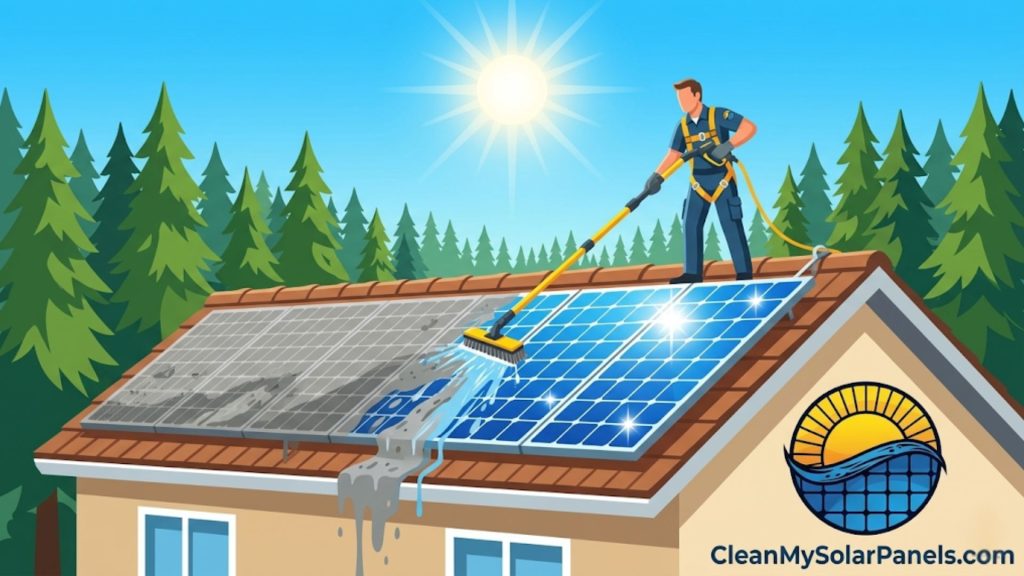
The easiest way to diagnose this is to observe the panels during a light rainstorm or when spraying them with a gentle mist of water.
- The “Beading” Danger: If the water beads up into thousands of tight, distinct little droplets that sit on the glass, your panels are coated in wax or a synthetic polymer. While water-beading is great for your car’s windshield, it is terrible for a solar panel. Each tiny water droplet acts like a miniature magnifying glass under the sun, creating severe, localized hot spots that can burn out the solar cells beneath.
- The “Sheeting” Ideal: Healthy, uncoated solar glass should be slightly hydrophilic. When water hits it, it should form a thin, even sheet that cascades smoothly down the glass, taking dust and dirt with it.
The Hard Water Multiplier: The Double Whammy
If you are using car wash soap, there is a 99% chance you are also using your standard garden hose to rinse it off. In the world of solar maintenance, this creates a devastating “double whammy” of damage.
Municipal tap water and private well water are considered “hard water.” They are full of dissolved minerals, primarily calcium and magnesium.
During a sunny afternoon, your dark solar panels can reach temperatures exceeding 150°F. If you spray cold, soapy tap water onto this superheated glass, the water will evaporate almost instantly. The waxy soap residue is left behind, and the dissolved calcium from the tap water bakes directly into that wax.
This creates a permanent, chalky white mineral scale on top of the sticky film. This mineral scale is incredibly difficult to remove without scratching the glass, and it permanently blocks sunlight, crippling your system’s ability to generate power.
If you want to fully understand the financial impact of doing this incorrectly, we highly recommend reading our data-backed analysis on the true cost of a dirty solar panel.
The Environmental Impact: Toxic Runoff in Your Yard
Aside from ruining the expensive technology on your roof, using car wash soap has a secondary consequence that many DIYers overlook: the environmental impact on your property.
When you wash your car in the driveway, the runoff typically flows into a municipal storm drain. However, when you wash your solar panels, the soapy runoff flows straight down your roof, through your gutters, and empties directly into your flower beds, organic vegetable gardens, or lawn.
Automotive soaps are packed with heavy, synthetic surfactants, artificial fragrances, foaming agents, and petroleum-based gloss enhancers. When these chemicals dump into your yard, they can poison the topsoil, kill delicate plants, and pose a severe ingestion hazard to pets that might drink from puddles near the gutter downspouts.
Other Household Cleaners to Avoid
Once homeowners realize that car wash soap is a terrible idea, they often start rummaging under the kitchen sink for an alternative. If you want to protect your system, you must avoid these common DIY mistakes as well:
- Dish Soap (Dawn, Palmolive): Wondering if you can use dishwashing liquid to clean solar panels? Absolutely not. While dish soap cuts grease, it is notorious for leaving a heavy, streaky, soapy film on glass that attracts dust just like car wax does.
- Glass Cleaners (Windex): Standard commercial glass cleaners contain harsh alcohols and ammonia. These harsh chemicals will chemically strip and burn away the delicate anti-reflective coating on your solar panels.
- Vinegar: While it is a popular natural cleaner, cleaning solar panels with vinegar introduces a mild acid to the hot glass. If mixed improperly or left on too long, it can cause severe chemical etching.
- Pressure Washers: Never point a pressure washer at your panels. The high-PSI blast will instantly blow out the waterproof silicone weather seals and shatter the tempered glass. You can read our full pressure washing safety guide here.
What Should I Use Instead? The Safe DIY Approach
If you are a dedicated homeowner and you insist on cleaning solar panels DIY, you must abandon the tools you use for your car and adopt the tools used by solar professionals.
To clean your panels safely, effectively, and without voiding your warranty, you need two specific things: The right water, and the right soap.
1. The Right Water: Deionized (DI) Water
Professionals never use tap water. They use Deionized (DI) Water Filtration Systems. These specialized resin tanks strip 100% of the dissolved minerals out of the water supply. Because the water is completely pure, it acts as a literal magnet for dirt. When you rinse the panels with DI water, they air-dry completely spotless and streak-free.
If you are going to DIY, you must purchase an inline, consumer-grade RV or solar DI water filter to attach to your garden hose before you spray a single drop on your roof.
2. The Right Soap: Solar-Specific Cleaners
For standard maintenance, pure DI water and a high-quality, ultra-soft flagged-bristle solar brush are often all you need. The pure water and the mechanical agitation of the soft brush will lift most dust and pollen.
However, if you are dealing with baked-on bird droppings, heavy agricultural dust, or sticky tree sap, you will need a cleaning solution to help break down the organic matter.
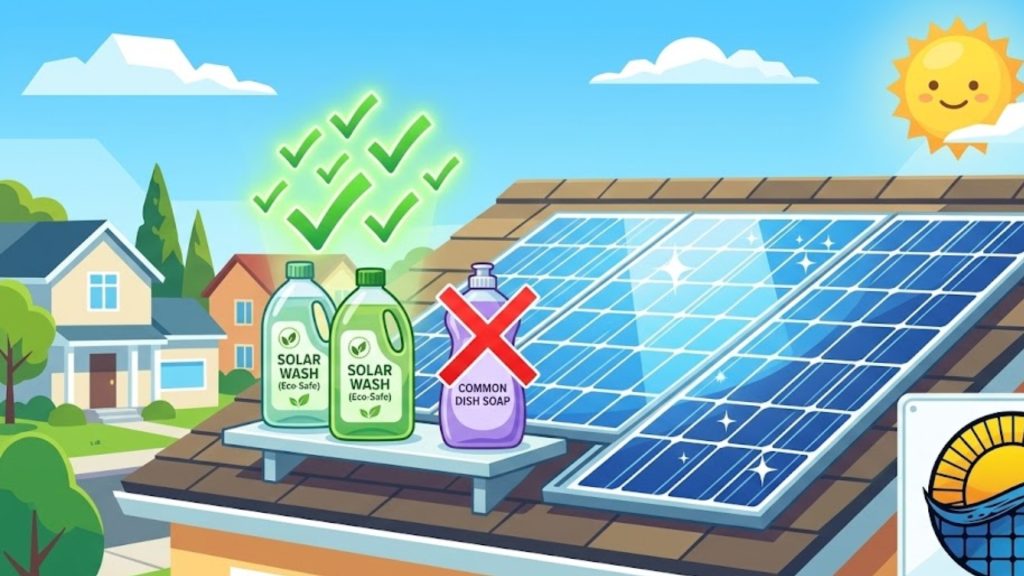
You must purchase a cleaner that is specifically engineered and formulated for photovoltaic glass. What makes the best soap for solar panels? It must be pH-neutral, 100% biodegradable, completely free of waxes or sealants, and formulated to rinse away entirely without leaving a microscopic film.
If you want to skip the guesswork and know exactly what products are safe to buy, use this link to go check out the 4 best soaps made specifically to clean solar panels. We break down the top professional-grade, zero-residue formulas that will protect your glass and your warranty.
Frequently Asked Questions (FAQs)
Can I use baby shampoo to clean my solar panels?
While baby shampoo is exceptionally mild and pH-neutral, it is still a soap designed to create suds and condition skin. It will leave a light, sticky residue on the glass that attracts dust over time. Always stick to zero-residue solar cleaners.
What about “touchless” car wash soaps?
Touchless car wash soaps are arguably even worse than standard car soaps. Because they are designed to clean a car without any physical agitation, they rely on incredibly harsh, highly caustic, or highly acidic chemicals to chemically burn the dirt away. These will instantly strip the anti-reflective coating off your solar panels.
Will the next rainstorm wash the car soap residue away?
No. Most car wash formulas containing synthetic polymers or Carnauba wax are specifically engineered to withstand weeks or months of rainfall to protect your car’s paint. The only way to remove a wax film from a solar panel is with a dedicated, professional-grade solar glass stripper and pure DI water.
The Economics: DIY Cost vs. Hiring a Professional
Before you head to the hardware store to buy a specialized DI water filter, a 30-foot carbon-fiber extension pole, and specialized solar soap, it is worth looking at the true economics of the job.
Building a proper, warranty-safe DIY solar cleaning kit will easily cost you between $400 and $700 upfront. Furthermore, navigating a slanted, wet roof introduces a massive, life-threatening risk of ladder falls and severe physical injury.
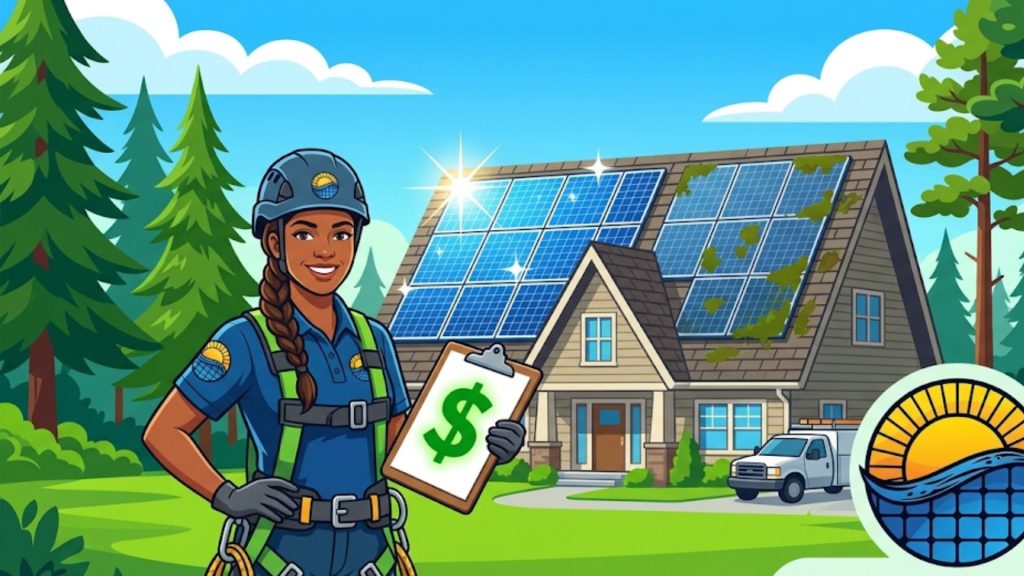
Conversely, hiring a verified, fully insured local professional typically costs a flat fee of $150 to $250.
Local professionals already own the massive, truck-mounted DI water systems and the ultra-soft carbon fiber brushes required to do the job safely. When you factor in the high cost of proper equipment and the severe physical risks of climbing on your roof, hiring a local expert is almost always the most cost-effective and stress-free solution.
Protect Your Energy Output
Your rooftop solar array is a complex, highly engineered miniature power plant designed to save you thousands of dollars over the next two decades. Treat it with the respect it deserves.
Your car wash soap was engineered to protect metal and paint; it was never designed for high-efficiency photovoltaic glass. Using automotive chemicals on your roof will leave a sticky, dust-attracting film that suffocates your energy production and voids your manufacturer warranty.
Avoid waxes and residues. Stick to de-ionized water or solar-specific cleaners.
If purchasing expensive pure-water filtration tanks and wrestling with 30-foot poles on a slippery roof sounds like a dangerous hassle, it is time to bring in the experts. At CleanMySolarPanels.com, we make it incredibly easy to find qualified, insured, and highly-rated solar cleaning professionals right in your specific neighborhood. Let the pros handle the chemistry and the ladders so you can enjoy maximum energy production year-round.