Why You Should NOT Use Vinegar to Clean Solar Panels
By Adam, Founder, CleanMySolarPanels · June 22, 2025
No — don't clean solar panels with vinegar. Acetic acid corrodes the anodized aluminum frame, etches the anti-reflective coating, and breaks down the rubber seals that keep moisture out of the panel. Canadian Solar and REC both prohibit acidic cleaners by name, and no manufacturer endorses vinegar.
The damage is the slow, invisible kind: panels look clean, then output creeps down years later as internal corrosion sets in. And if a failed panel shows evidence of acid exposure, the manufacturer can deny your warranty claim — a serious risk on a system built to perform for 25 years or more.
Below: why the vinegar hack spread, exactly how the acid attacks each panel component, what the major manufacturers actually allow, and the safer way to get panels cleaned.
Can You Clean Solar Panels With Vinegar? A Risky Idea
You’ve made a smart investment in clean energy for your home. So, when it comes to maintenance, it’s natural to look for eco-friendly, budget-conscious solutions. The idea of using simple white vinegar to clean your solar panels seems to tick all the right boxes. It’s cheap, natural, and you probably have it in your pantry right now.
But is this popular internet “hack” a brilliant money-saver or a costly mistake?
At CleanMySolarPanels.com, our job is to connect you with the facts and with trusted local experts. We did a deep dive into the science, checked manufacturer guidelines, and consulted with professionals to get the definitive answer. Here’s what we found out about the vinegar solution—and why it’s great for your salad, but a terrible idea for your solar panels.
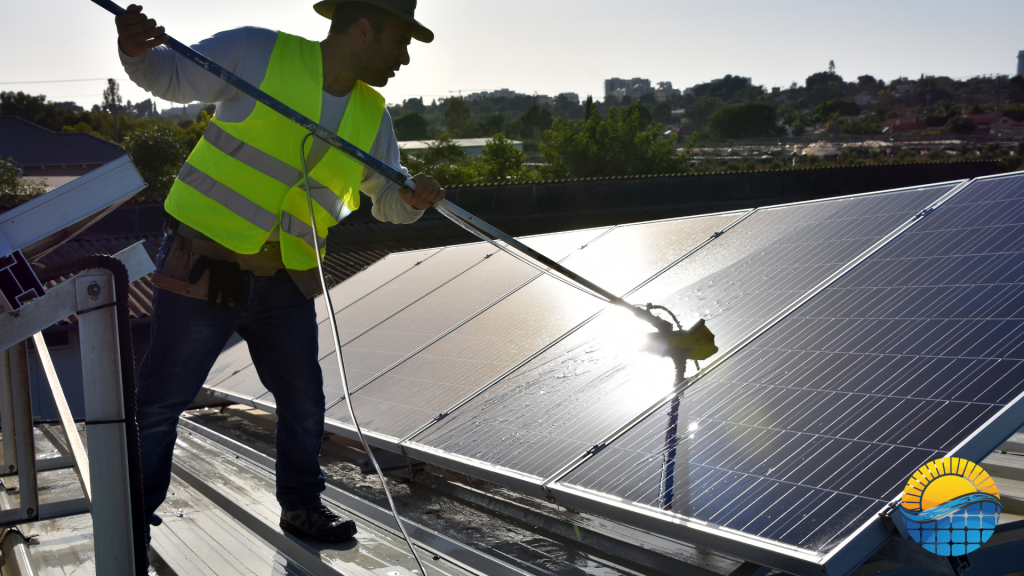
The Allure of Vinegar: Why Does It Seem Like a Good Idea?
The appeal of using vinegar is powerful and easy to understand. Online forums and DIY blogs often praise it as the perfect cleaning solution. The logic seems sound:
- It’s Inexpensive: A gallon of vinegar costs just a few dollars, while specialized solar cleaners can be pricey.
- It’s Eco-Friendly: As a natural, biodegradable product, vinegar won’t harm your landscaping or local wildlife when it runs off the roof.
- It Seems Effective: Vinegar’s acidity is known to cut through grime, bird droppings, and hard water stains without leaving soapy streaks behind.
The supposed method is simple: dilute vinegar with water, spray it on, give a gentle scrub, and rinse. It’s easy to see how this narrative has become so popular. But this simple story leaves out the most critical details—the hidden risks that can silently compromise your system.
The Hidden Chemistry: How Vinegar Can Damage Your Panels
A solar panel isn’t just a sheet of glass; it’s a highly engineered, multi-layered electronic device. Introducing an acid like vinegar, even a diluted one, can set off a chain reaction of slow, silent degradation that you won’t notice until it’s too late.
The danger lies in how acetic acid (the active component in vinegar) interacts with the critical components of your solar panel.
| Panel Component | Material | Function | Risk from Acetic Acid (Vinegar) |
| Frame | Anodized Aluminum | Structural Support & Mounting | Breaks down the protective oxide layer, causing corrosion and weakening the panel’s structure over time. |
| Anti-Reflective (AR) Coating | Microscopic Layer on Glass | Maximizes Sunlight Absorption | Can be etched or degraded by acid, permanently reducing the panel’s energy output and efficiency. |
| Seals/Gaskets | Silicone/EPDM Rubber | Prevents Moisture Ingress | Causes chemical breakdown, making seals brittle and prone to cracking, which leads to water damage inside the panel. |
| Internal Contacts | Silver/Lead-Silicate Frit | Conducts Electricity | If seals fail, acidic moisture entering the panel will accelerate corrosion, causing hot spots and total module failure. |
A homeowner could clean their panels with vinegar, see a visually pleasing result, and believe the job was a success. They would have no idea that the acidic runoff has begun a slow assault on the frame and seals. Years later, when energy bills start creeping up due to irreversible internal corrosion, the connection to that “harmless” DIY cleaning is rarely made.
Beyond the Bottle: The Practical Dangers of DIY Cleaning
Even if you ignore the chemical risks, the physical act of cleaning solar panels yourself is filled with hazards that can lead to personal injury or irreversible equipment damage.
- Personal Safety: Working on a roof is inherently dangerous. Add water and a slippery solution, and the risk of a life-altering fall increases dramatically. Professionals use certified safety gear like harnesses and fall protection systems for a reason. Furthermore, solar panels are active electrical devices. An unnoticed crack or damaged seal can create a lethal shock hazard when water is introduced.
- Thermal Shock & Micro-Cracks: Spraying cool water onto a hot solar panel can cause a rapid temperature change, creating microscopic cracks in the glass and the silicon cells. These micro-cracks, invisible to the naked eye, permanently reduce power output and can lead to premature panel failure.
- Abrasive Damage: It’s easy to scratch the panel’s glass and its delicate anti-reflective coating. Using a hard-bristled brush, a gritty cloth, or even the wrong technique can permanently scatter sunlight and lower your energy production.
- The Pressure Problem: Never use a pressure washer. The intense stream of water is strictly forbidden by every manufacturer. It can force water past the panel’s protective seals, injecting moisture that will destroy the panel from the inside out.
- The Hard Water Problem: Most tap water is “hard,” containing dissolved minerals. When this water evaporates, it leaves behind a chalky white film (limescale) that blocks sunlight and reduces efficiency. In effect, cleaning with your garden hose can leave your panels producing less energy than when you started.
This is why professionals invest in expensive mobile water purification systems. They use ultra-pure, de-ionized water that cleans effectively and dries completely spot-free.
The Manufacturer’s Verdict: Protecting Your 25-Year Warranty
In any debate about proper maintenance, the manufacturer’s voice is the one that matters most. Your solar system’s warranty is the bedrock of your investment, and using unapproved methods or chemicals is one of the fastest ways to void it.
It is worth being precise about what the manufacturers actually say, because the internet is not. Canadian Solar and REC both prohibit acidic and alkaline cleaners by name. Maxeon, the company that now makes SunPower panels, does not mention acid at all — its cleaning section is concerned with abrasion, not pH. So the case against vinegar is not “every manufacturer bans it.” It is that two major manufacturers explicitly do, none endorses it, and acetic acid attacks the anodised aluminium frame and the EPDM and silicone seals whether or not a warranty document names it. Where a manufacturer does address it, the instruction is the same: do not use acidic or corrosive solutions.
| Manufacturer | Recommended Cleaner | Prohibited Cleaners / Methods | Key Warning |
| Canadian Solar | Water with low mineral content, near-neutral pH. | Corrosive solutions (acid, alkali), abrasive cleaners. | “Damage induced by inappropriate cleaning procedures will void Canadian Solar warranty.” |
| REC Group | Water with a mild biodegradable washing-up liquid; IPA below 10%. | Acid and alkali detergents; pressure and steam cleaners. | “Acid or Alkali detergent must not be used.” |
| Maxeon / SunPower | Potable non-heated water, an over-the-counter glass cleaner, or a 3% soap-and-water solution. | Abrasives — scouring powder, steel wool, blades and scrapers. | Silent on acid. The prohibition in Maxeon’s manual is abrasion, not pH. |
| Q CELLS | Lukewarm water, soft cloth. Isopropyl alcohol selectively for stubborn stains. | Abrasive detergents, tensides, scratching. | “Do not use abrasive detergents or tensides.” |
| Trina Solar | Soft cloth, water with a temperature similar to the module. | Corrosive solvents, hard objects. | Prohibits use of any liquid whose temperature greatly differs from the panel’s. |
Using vinegar is a direct violation of these guidelines. If a panel fails due to seal degradation or corrosion, and the manufacturer finds evidence of acid exposure, they have the right to deny your warranty claim. You would then be responsible for the full cost of replacing the panel, turning a simple attempt to save a few dollars into a multi-hundred-dollar mistake.
The Professional Advantage: The Smartest Choice for Your Investment
Hiring a qualified professional solar panel cleaner isn’t a luxury; it’s a vital part of protecting your high-value asset.
- Safety & Insurance: Professionals are trained and insured to work safely on your roof, eliminating the risk to you.
- The Right Tools: They use purified water and specialized, non-abrasive brushes to deliver a perfect, spot-free clean without any risk of damage.
- Warranty Compliance: A reputable cleaner knows the manufacturer guidelines and uses approved methods, ensuring your warranty remains secure. Their invoice serves as proof of proper maintenance.
- Expert Inspection: While cleaning, a pro can spot potential issues like loose clamps or pest damage, helping you prevent bigger problems down the road.
Your solar energy system is designed to perform for 25 years or more. Don’t risk its health and longevity on a questionable internet hack.
Ready to protect your investment and maximize your energy savings?
CleanMySolarPanels.com makes it easy. We are the leading online directory dedicated to connecting homeowners like you with local, reputable, and insured solar panel cleaning professionals.
Find a Trusted Solar Panel Cleaner in Your Area Today! – Get Your Free, No-Obligation Quote