The Homeowner’s Guide to Solar Panel Maintenance: Protecting Your Investment from Hidden Threats
By Adam, Founder, CleanMySolarPanels · June 22, 2025
The safe way to clean under solar panels is to hire a professional — the panels stay electrically live whenever light hits them, and the compacted debris underneath can't be reached with a hose. Leaves, pine needles, and nests trapped under the array block cooling airflow, create fire-prone hotspots, and hold moisture against your roof.
Surface grime costs you too: NREL puts typical annual soiling loss at about 5% — and rain never touches what collects underneath. A professional cleaning runs $110–$320 for most homes, cheap insurance next to repairs that can reach $1,000–$3,000 for a single inverter.
Below: how under-panel debris damages your system, why DIY backfires, and what a proper professional cleaning includes.
Section 1: How Hidden Debris Drags Down Your Solar Savings
The core function of your solar investment is simple: turning sunlight into electricity. Anything that gets in the way of that process directly reduces your financial returns. While you can easily see dirt on the surface of your panels, it’s the debris that collects underneath that creates a more dangerous and compounding set of problems.
The Science of Soiling and Its Impact on Efficiency
When materials like dust, pollen, or bird droppings cover your panels, they block sunlight from reaching the photovoltaic (PV) cells. This effect, known as “soiling,” is a direct cause of performance loss.
How much of an impact does it have? The National Renewable Energy Laboratory puts typical annual soiling loss at about 5% across the U.S., ranging from roughly 2% in wet climates to 7% where it is dusty or traffic-heavy. Pollen-heavy regions are the exception: NREL measured around 10% across a year there, with peaks near 15%. Figures of 25% and 30% get repeated constantly online, but they come from desert utility plants and heavy industry, not from a house.
Think rain will take care of it? Unfortunately, that’s another common mistake. Rain can wash away loose dust, but it’s ineffective against stubborn grime. In polluted areas, rainwater can even leave behind a film after it evaporates. Worse, morning dew can mix with dust to form a hard, cement-like layer that rain won’t budge.
Google published figures from its own array that get widely misquoted, and the detail matters if your panels sit on a pitched roof. On its flat carport panels, left fifteen months without washing, the first cleaning doubled output and a second cleaning eight months later added another 36%. On its tilted rooftop panels there was only a small increase — rain cleaned those well enough on its own. Tilt is the variable that decides this. A flat array genuinely needs washing; a pitched roof mostly needs it for what rain cannot move — sap, droppings, moss and pollen — and for the debris that collects underneath the modules, which rain never touches at all.
The Under-Panel Menace: A Hotbed for Trouble
While surface dirt hurts efficiency, the debris that builds up underneath your solar panels is far more dangerous. This hidden area is where threats to your system’s longevity, your home’s structure, and your family’s safety begin.
Solar panels are installed with an air gap for a reason: to allow air to flow and cool them down. Panels lose efficiency as they get hotter. When leaves, pine needles, and nesting materials clog this gap, they act like insulation, trapping heat. This leads to two major problems:
- Reduced Efficiency: The entire system runs hotter, lowering your energy output and accelerating the aging of the panels.
- Dangerous Hotspots: Trapped debris can create intense “hotspots” on a specific part of a panel. These hotspots cause a disproportionate loss of power, can lead to irreversible damage, and are a recognized fire hazard.
This trapped debris also acts like a sponge, holding moisture against your roofing materials, which can lead to mold, rot, and eventually, leaks.
Finally, this sheltered space is an ideal home for pests like pigeons, squirrels, and raccoons. They bring in flammable nesting materials and are notorious for chewing on electrical wiring—a leading cause of solar system failures and a severe fire and electrocution hazard.
This chain reaction—from simple leaves to trapped heat, roof rot, and pest-induced fire risk—is why addressing what’s under your panels is a critical safety imperative.
Table 1: Common Debris and Their Hidden Dangers
| Debris Type | Associated Risks (Panels, Wiring & Roof) | Overall Hazard Level |
| Dry Leaves, Pine Needles, Twigs | Causes airflow obstruction and hotspots on panels. Acts as flammable nesting material. Leads to moisture retention and shingle deterioration on the roof. | High |
| Bird/Pigeon Nests & Droppings | Corrodes panel frames and wiring connections. Causes surface soiling and hotspots. Accelerates roof rot and clogs gutters. | High |
| Squirrel/Rodent Debris & Nests | Obstructs airflow. Creates a severe risk of wires being chewed, leading to short-circuits. Can lead to pests entering the roof structure. | Extreme |
| Dust, Pollen, Soot, & Pollutants | Reduces efficiency through surface soiling. Can cause abrasive scratching and chemical corrosion on panels. | Moderate |
| Trapped Moisture from Debris | Degrades panel seals and promotes mold on frames. Increases corrosion risk for wiring. Causes severe shingle degradation, mold, and leaks. | High |
Section 2: The High-Stakes Gamble of DIY Cleaning
It’s tempting to try and save money with a DIY approach to solar panel cleaning. A hose, a bucket, and a soft brush seem simple enough. The problem is, this approach is both ineffective against the most serious threats and introduces a host of new, potentially catastrophic risks.
The High Cost of a Simple Mistake
Your solar panels are sophisticated pieces of equipment, not simple windows. A well-intentioned but improper DIY cleaning can cause permanent, expensive damage.
- Surface Scratches: Using a brush with bristles that are too hard or a cloth that has picked up abrasive grit can create micro-scratches on the panel’s anti-reflective coating, permanently reducing its efficiency.
- Chemical Damage: Household cleaners, especially those with ammonia, can strip this coating and degrade the seals that protect the panel’s internal components from moisture.
- Pressure Washing: This is the cardinal sin of solar panel cleaning. A pressure washer can force water past the panel’s seals, causing short circuits, and will almost certainly void your warranty on the spot.
- Thermal Shock: Spraying cold water from a hose onto hot panels can cause invisible microcracks in the solar cells, leading to reduced performance and eventual panel failure.
- Hard Water Deposits: If you live in an area with hard water, letting tap water evaporate on your panels will leave behind a film of mineral deposits (limescale) that blocks sunlight just as much as the original dirt.
The Gravest Risk: Your Personal Safety
Beyond damaging your property, a DIY approach puts you in personal danger.
- Fall Hazards: This is the most immediate threat. Navigating a sloped, wet roof while handling cleaning equipment is incredibly dangerous. Most homeowners lack the professional-grade fall arrest systems and training required to work safely at heights.
- Electrical Hazards: This is the most misunderstood danger. Solar panels are always electrically live when exposed to any light, even on a cloudy day. They cannot be “turned off” at the panel. The disconnect switches only isolate the array from your house and the grid; the panels and wiring on the roof remain energized. Standing on a wet roof and coming into contact with a wire damaged by a squirrel creates a perfect storm for a lethal electrical shock.
The DIY approach is a flawed strategy because it often creates new problems while failing to solve the most critical ones. You might wash off surface dirt only to leave behind mineral spots, create scratches, or cause hidden cracks, all while the dangerous debris and chewed wires remain untouched underneath.
Ready to find a safe and effective solution? Don’t risk your investment or your safety. Use the CleanMySolarPanels.com directory to find a qualified and insured professional cleaner in your area today!
Table 2: DIY vs. Professional Cleaning: A Risk-Benefit Comparison
| Factor | DIY Approach & Associated Risks | Professional Approach & Benefits |
| Personal Safety | Extreme risk of falls. No professional safety equipment or training. | Trained and insured for work at heights. Utilizes proper fall protection. |
| Electrical Safety | High risk of lethal DC electrocution. Panels are always live. | Trained in electrical hazards. Uses non-conductive equipment. |
| Panel Surface Integrity | High risk of permanent scratches and chemical damage. | Preserves panel surface. Uses specialized, non-abrasive brushes. |
| Panel Health (Seals/Cells) | Risk of thermal shock and water intrusion from pressure washing. | Prevents thermal shock. Uses low-pressure, controlled water flow. |
| Cleaning Efficacy | Sub-optimal results. Tap water leaves mineral deposits. | Maximizes efficiency. Uses purified water systems for a spot-free finish. |
| Under-Panel & Roof Care | Ineffective. Cannot remove compacted debris or inspect the roof. | Comprehensive cleaning. Removes all under-panel debris and inspects for damage. |
| Pest Abatement | Cannot safely address infestations or install barriers. | Full pest solution. Removes nests and installs professional “critter guard” mesh. |
| Warranty Compliance | High risk of voiding warranty through improper methods. | Ensures warranty compliance. Follows manufacturer guidelines. |
| Long-Term Cost | Low initial outlay but high potential for catastrophic repair costs ($500-$3,000+). | Predictable service fee acts as insurance against costly repairs. |
Section 3: The Professional Standard: The Right Way to Clean Under Solar Panels
Hiring a professional solar panel cleaning service is about more than just washing your panels. It’s a comprehensive maintenance protocol that correctly and safely addresses the critical under-panel area.
The Professional Process
So, how do you clean under solar panels? The answer is you hire a trained professional who follows a structured process:
- Site Assessment: They begin with a detailed inspection of the panels, wiring, and under-array area to identify pre-existing damage, soiling type, and pest activity.
- Safety Shutdown: They follow proper safety protocols, shutting down the system at the AC/DC disconnects.
- Specialized Cleaning: Using purpose-built tools, they gently and methodically remove all contaminants from the panel surfaces.
- Under-Panel Cleaning & Pest Abatement: This is the key step. A pro has the tools and training to get under the array to manually and completely remove the compacted leaves, nests, and debris. They can also install professional, warranty-safe “critter guards”—a durable wire mesh that physically blocks pests from getting back under the panels without voiding your warranty.
- Final Inspection and Reporting: After cleaning, they perform a final inspection and provide you with a report detailing the service and noting any areas of concern, like potential hotspots or frayed wiring, that may need attention from an electrician. This “health check” for your system is invaluable.
The Right Tools for the Job
Professionals use specialized equipment that protects your investment:
- Pure Water Filtration Systems: They use mobile reverse osmosis (RO) or deionization (DI) systems to create purified water. This water cleans more effectively and evaporates without leaving any efficiency-reducing mineral spots.
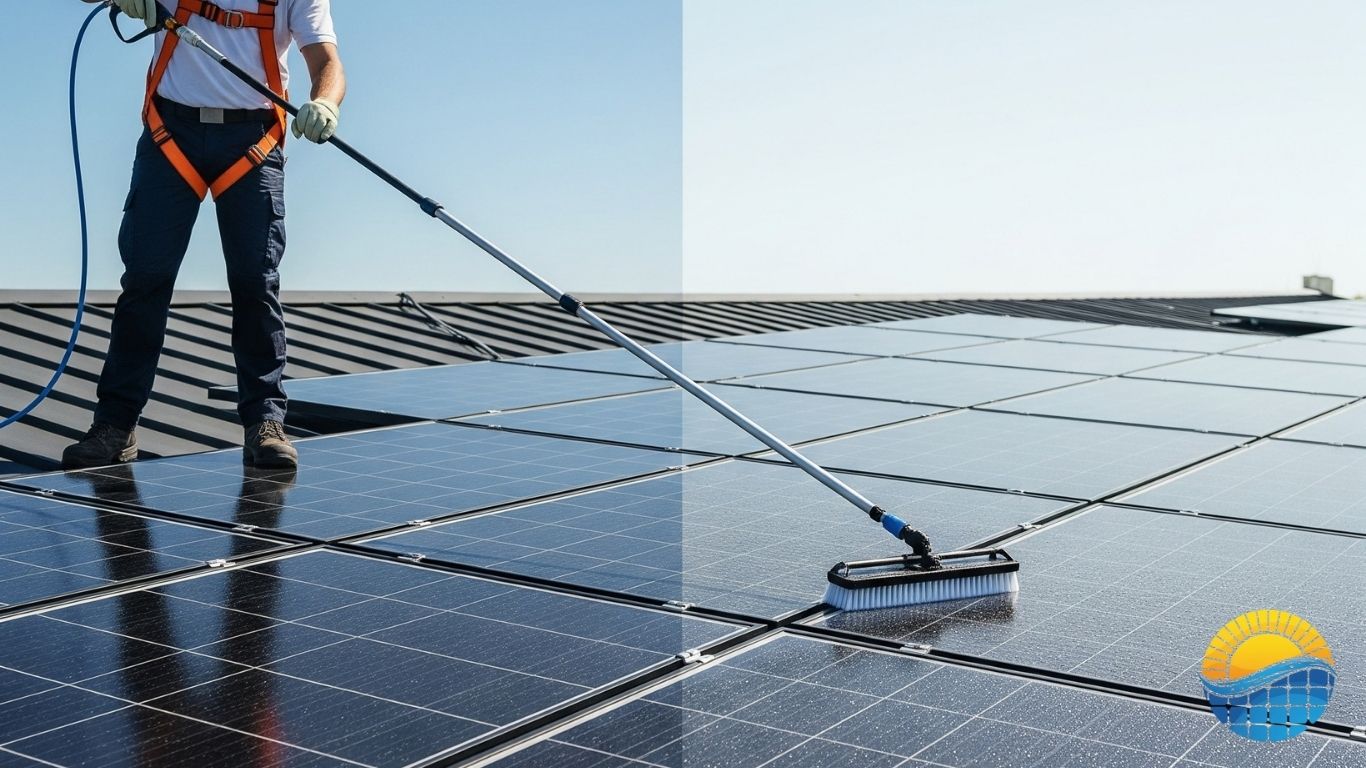
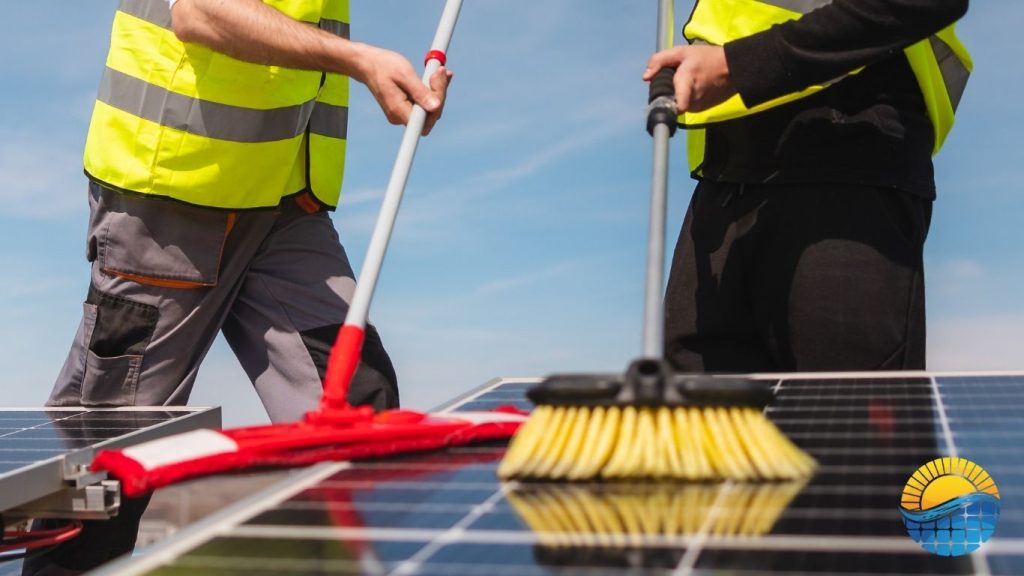
- Water-Fed Poles & Soft Brushes: Lightweight, telescopic poles allow technicians to clean safely and effectively, often from a ladder or the ground. The brush heads feature extremely soft bristles designed specifically to lift dirt without scratching the panel’s sensitive surface.
Hiring a professional transforms a cleaning appointment into a crucial preventative maintenance service, allowing you to catch small problems before they become catastrophic failures.
Section 4: Protecting Your Protection: Warranties and Insurance
Your solar system is backed by valuable warranties and your homeowner’s insurance. A misguided DIY cleaning can easily jeopardize this crucial financial safety net.
Most manufacturer warranties contain an “improper maintenance” clause. Using a pressure washer, the wrong brush, or harsh chemicals can be deemed improper care and may void your warranty. Similarly, if a fire is caused by wires you tried to fix yourself, your homeowner’s insurance claim could be denied.
When you hire a legitimate, insured professional, you transfer that risk. Their General Liability insurance covers any accidental property damage, and their Workers’ Compensation insurance covers any on-the-job injuries. The homeowner is protected from financial liability. This is a key advantage that makes professional service a smart financial decision.
Section 5: The Financial Verdict: The True ROI of Professional Maintenance
A true financial analysis goes beyond comparing the upfront cost. It must account for recovered energy, preserved asset value, and the mitigation of expensive risks.
- Cost of Service: A professional cleaning typically costs between $150 and $350.
- Cost of Neglect: A heavily soiled system can lose hundreds of dollars in energy savings per year.
- Cost of Damage: A single DIY mistake can be far more expensive than years of professional cleanings.
- Repairing cracked panel glass: $120 to $500
- Repairing rodent-chewed wiring: $100 to $400
- Replacing a single damaged panel: $300 to $500+
- Replacing a string inverter: $1,000 to $3,000
The return on investment (ROI) for professional cleaning is clear. The service pays for itself by maximizing your energy production and, more importantly, by serving as an affordable insurance policy against catastrophic repair bills that could wipe out years of your solar savings.
Table 3: Risk-Adjusted 5-Year Financial Comparison: DIY vs. Professional Maintenance
| Financial Metric | DIY Maintenance Scenario | Professional Maintenance Scenario |
| Direct Costs (5-Year Total) | $100 | $2,000 |
| Risk-Adjusted Potential Costs (5-Year) | $77.50 | $0 |
| Total 5-Year Risk-Adjusted Cost | $177.50 | $2,000 |
| 5-Year Energy Gain (Est. $75/yr) | $375 | $375 |
| Net Financial Outcome | +$197.50 | -$1,625 |
| Financial Outcome if a Single Panel is Damaged | -$425 (Gain – supplies – repair) | +$375 (Gain is realized, repair is covered by pro’s insurance) |
Note: Probabilities in the original text are illustrative. The key takeaway is the final row: a single, plausible DIY error results in a significant net financial loss, whereas the professional service protects your financial gain.
Final Thoughts: The Smart Choice for Peak Performance and Peace of Mind
For the homeowner who views their solar array as the long-term financial asset it is, professional service is an operational necessity.
The risks of DIY cleaning—from permanent panel damage to voided warranties and life-threatening falls—are simply too high, especially when dealing with the complex and hazardous area under the panels. The professional standard offers a holistic system of asset management that cleans, inspects, and protects your entire investment. It is the only reliable method to ensure the long-term safety, peak efficiency, and enduring value of your solar energy system.
Don’t gamble with your investment. Make the smart choice.
Ready to protect your solar asset? CleanMySolarPanels.com makes it easy. We are the leading online directory dedicated to connecting you with qualified, insured, and reputable local solar panel cleaning providers.
Click here to find a trusted solar panel cleaner near you and get your free quote today!