Can I Use a Leaf Blower to Clean Solar Panels? The 2026 DIY Guide
By Adam, Founder, CleanMySolarPanels · May 18, 2026
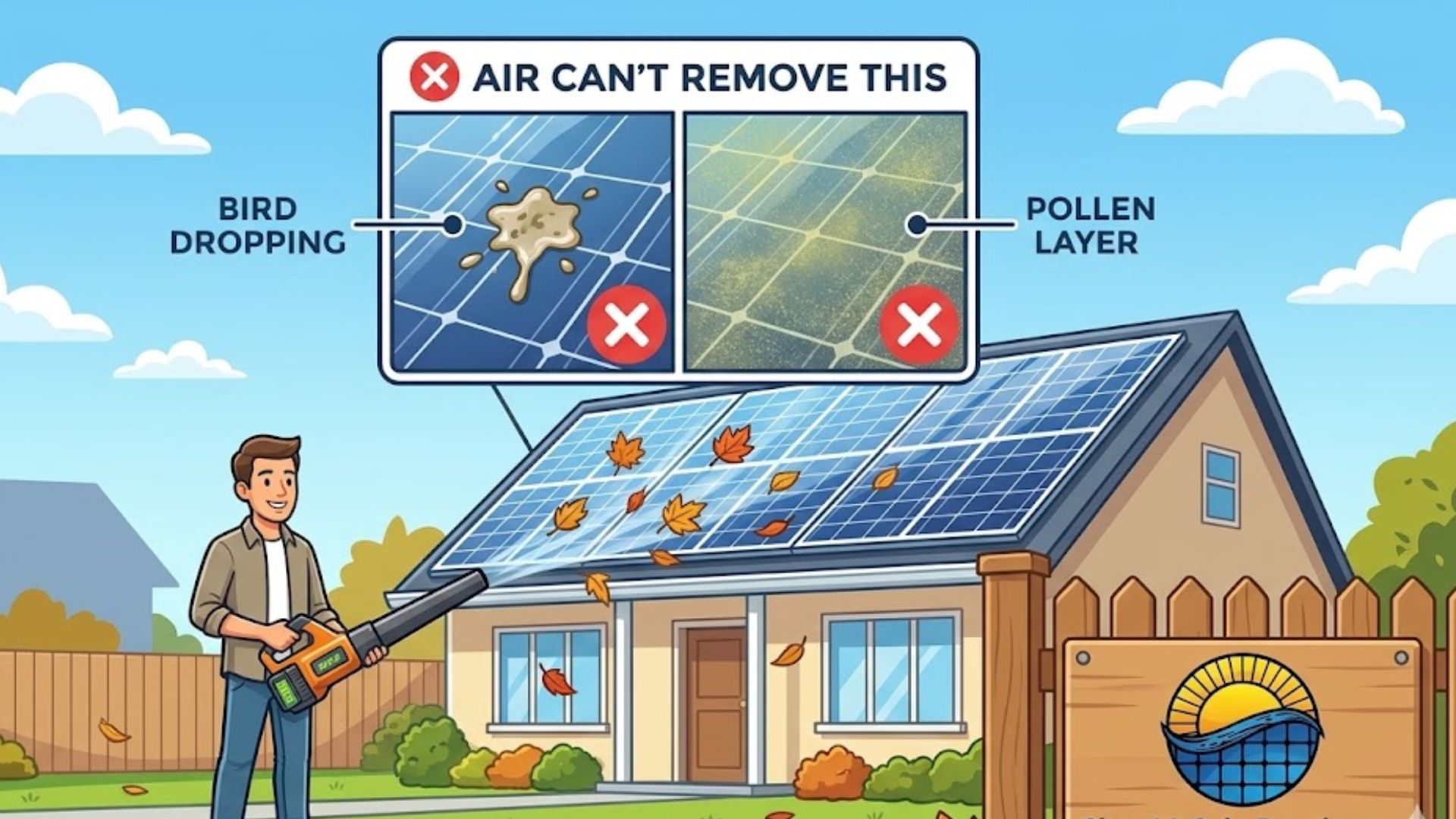
Yes, you can use a leaf blower on solar panels — but it will only do 10% of the actual job. A battery-powered blower is a safe way to clear dry leaves, pine needles, and loose top-layer dust. What it can't touch is the baked-on film of pollen, bird droppings, and smog that actually steals your power: the National Renewable Energy Laboratory puts soiling loss at around 5% of annual output for a typical U.S. system, and no amount of air pressure recovers it.
There's also one real hazard: aim the nozzle up the roof slope and you pack combustible debris into the gap under the array, right against the wiring.
Here's what a blower can and can't clean, gas vs. electric, the under-panel danger, and when water becomes non-negotiable.
The Limits of “Dry Cleaning Solar Panels”
In the commercial solar industry, dry cleaning solar panels is a real concept, but it is typically reserved for massive, utility-scale solar farms located in hyper-arid deserts (like the Middle East or the Mojave), where water is scarce and the only debris is loose, dry sand.
For a residential homeowner living in a standard suburb or a wooded neighborhood, the environment is vastly different. Your roof is bombarded by a complex mixture of organic and chemical compounds.
Using a leaf blower for solar panel cleaning relies entirely on air pressure. Air pressure is fantastic at moving things that are resting loosely on top of a surface. However, air pressure completely lacks the physical friction and chemical solvency required to break the bond of sticky materials.
The National Renewable Energy Laboratory puts “soiling loss” — the accumulation of dirt on solar glass — at around 5% of annual output for a typical U.S. system, ranging from roughly 2% in wet climates to 7% where it is dusty or traffic-heavy. In pollen-heavy regions NREL measured about 10% across a year and up to 15% at peak season. Relying strictly on air pressure will not recover this lost efficiency.
What a Leaf Blower CAN Do
If you want to perform some basic weekend solar panel maintenance, leaves, twigs, and loose dirt are exactly what your blower was designed for.
Aiming a leaf blower at your array (preferably from a safe vantage point on the ground using an extension nozzle, or safely from a sturdy ladder) is a great way to handle:
- Dry Autumn Leaves: Quickly blowing dry leaves off the glass prevents them from eventually rotting and turning into a wet, sticky mulch that invites mold.
- Loose Pine Needles: Preventing pine needles from accumulating in the tracks and gaps between your panels helps maintain proper rainwater drainage down to your gutters.
- Top-Layer Dust: If you live in an area with high winds, a quick blast of air can remove the loose top layer of “fresh” dust that hasn’t yet been exposed to morning dew.
What a Leaf Blower CANNOT Do (The Filmic Layer)
This is where the DIY shortcut fails. The vast majority of the soiling loss that causes your energy production to plummet is not loose. It is baked onto the glass.
When airborne dust, agricultural soil, or urban smog settles on your panels, it mixes with the damp morning dew or coastal marine layers. When the sun comes out and bakes that moisture away, it leaves behind a stubborn, microscopic “filmic layer” of grime. A leaf blower cannot break this bond.
Here are the specific, highly destructive culprits that air pressure will never remove:
- Bird Droppings: Highly acidic and completely opaque. A leaf blower will do absolutely nothing to a baked-on bird dropping. Left untreated, it will create an electrical hotspot and permanently etch your glass.
- Sticky Tree Sap: If your roof is shaded by pines or Douglas Firs, sap acts like superglue on your panels. It traps dirt against the glass, and it requires specialized soft-bristle agitation to remove.
- Spring Pollen: Pollen is naturally sticky and oily. It creates a yellow-green haze across the anti-reflective coating of your panels that an air blower cannot budge.
- Oily Smog: If you live near a highway or a major city, vehicular exhaust creates an oily film that actively repels air and water.
Quick Reference: What a Leaf Blower Can and Cannot Clean
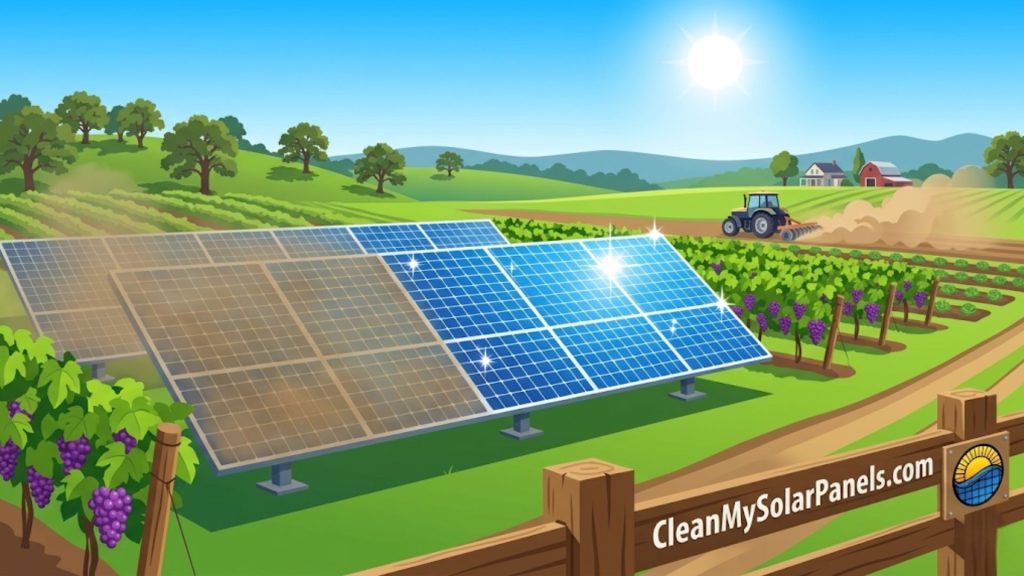
To help you quickly assess whether it’s worth firing up the blower, here is a clear breakdown of how air pressure performs against common roof debris:
| Type of Debris | Leaf Blower Effectiveness | Why It Succeeds or Fails | The Correct Solution |
| Dry Autumn Leaves | Highly Effective | Leaves are light, loose, and dry. | Battery-powered leaf blower |
| Fresh Top-Layer Dust | Moderately Effective | Loose, but static electricity holds some back. | Leaf blower (for top layer) |
| Light, Powdery Snow | Moderately Effective | Easy to blow off if done immediately. | Leaf blower (from a distance) |
| Baked-on Pollen & Sap | Ineffective | Sticky, oily, and bonded to the glass. | Pure water & soft-bristle brush |
| Bird Droppings | Ineffective | Acidic and baked onto the hot glass. | Professional wet-wash |
| Urban Smog & Grime | Ineffective | Leaves a sticky, oily film that resists air. | Professional DI water system |
Gas vs. Electric Leaf Blowers: Does It Matter?
If you are going to use a leaf blower on your roof, the type of blower you use is incredibly important. Many homeowners do not realize that their high-powered gas leaf blower can actually make their solar panels significantly dirtier.
Gas-Powered Blowers (The Danger):
Most backpack leaf blowers run on a 2-stroke engine, which requires a mixture of gasoline and oil to operate. As these engines run, they expel microscopic droplets of unburnt fuel and oily exhaust out of the nozzle alongside the air. If you stand close to your solar panels and blast them with a gas-powered blower, you are actively spraying a fine layer of petroleum oil directly onto your anti-reflective glass. This oily film will trap dust instantly.
Electric/Battery-Powered Blowers (The Safe Option):
If you must blow dry debris off your array, you should exclusively use a corded electric or modern lithium-ion battery-powered leaf blower. These emit clean, oil-free air, ensuring you don’t accidentally coat your expensive panels in engine exhaust.
The Hidden Danger: Blowing Debris UNDER the Panels
While using a clean, battery-powered leaf blower on the top of the glass is relatively harmless, aiming the nozzle at the wrong angle can create a catastrophic hazard for your home.
When removing debris from solar panels, you must be hyper-aware of the small, 4-to-6-inch gap between the bottom of the solar panel and your actual roof shingles. This gap is vital; it allows air to circulate under the panels, keeping the electrical components cool and preventing your roof from overheating.
If you stand below your panels and aim a high-powered leaf blower up the slope of the roof, you are going to force all of those leaves, pine needles, and dirt directly underneath the solar array.
Why Debris Under Your Panels is a Nightmare
Forcing debris into this narrow gap creates three massive problems:
- The Ultimate Fire Hazard: You are essentially packing dry, highly combustible kindling directly against high-voltage electrical wires and junction boxes. During a hot summer day, this is a severe fire hazard.
- Damaging Exposed Wires: The intense, concentrated air pressure from a 150 MPH leaf blower can easily whip loose twigs and debris into the fragile, soy-based wiring harnesses under the panels, potentially severing a connection or unseating a vital plug.
- Building a Home for Pests: Pigeons, roof rats, and squirrels love to nest under solar panels. By blowing a massive pile of leaves and twigs under the array, you are literally building the nest for them! Once pests move in, they will chew your wires and destroy your system. To understand how destructive this is, read our guide on how to stop pests from ruining your system.
💡 Pro Tip: If you are going to use a leaf blower to clear your roof, you must position yourself above the solar panels (near the roof ridge) and blow the debris down and away from the gap, never up into it. Alternatively, blow horizontally across the face of the panels.
Winter Maintenance: Remove Snow From Solar Panels with a Leaf Blower
What about the winter months? If you live in a snowy climate, you know that a heavy blanket of snow brings your solar energy production to a grinding halt. Because using a snow shovel or a hard plastic ice scraper will instantly scratch your glass and void your manufacturer warranty, homeowners constantly look for safe alternatives.
Can you remove snow from solar panels with a leaf blower?
Yes, but only under very specific conditions.
A leaf blower is actually one of the safest tools you can use to clear a solar array in the winter, provided the snow is light, dry, and powdery. A strong blast of air from a distance can easily clear a few inches of fresh powder, allowing the dark glass to catch the sun and naturally melt the rest.
However, if the snow is wet, heavy, or has formed an icy crust, a leaf blower will be completely ineffective. Furthermore, you must practice extreme caution regarding Thermal Shock. If your panels are freezing cold and you use a high-powered gas leaf blower (which emits hot engine exhaust from the nozzle) at close range, the sudden, intense heat hitting the freezing tempered glass can cause the panel to shatter instantly.
The Two-Step Method: Combining Air and Water
If you are determined to tackle the cleaning yourself, the most efficient way to use your leaf blower is as Step 1 of a two-step process.
- Step 1 (The Dry Pass): Use a battery-powered leaf blower to quickly clear the massive piles of dry leaves, pine needles, and loose dirt from the roof and the surface of the glass. This saves you from creating a massive, muddy mess when you introduce water.
- Step 2 (The Wet Wash): Once the loose debris is gone, you must follow up with water and a specialized soft-bristle solar brush to lift the baked-on film, pollen, and bird droppings.
When you move to Step 2, remember that you cannot use standard tap water (which leaves chalky mineral stains) or harsh chemicals like dish soap (which leave a sticky residue). You must use pure, deionized (DI) water or a dedicated solar panel cleaning soap to ensure the glass dries flawlessly.
Leaf Blower Solar Panel Safety Protocols
If you decide to use your leaf blower, you must follow strict leaf blower solar panel safety protocols to protect yourself and your equipment.
- Never Walk on the Panels: This should go without saying, but never step on your solar array to get a better angle with your blower. You will cause invisible micro-cracks that permanently destroy the silicon cells. Read our full safety warning: Is it safe to walk on solar panels?
- Stay on the Ground if Possible: If your leaf blower has gutter-cleaning extension tubes, use them to blow the leaves off your first-story array while keeping your feet firmly planted on the grass.
- Beware the Roof Fall Hazard: The Occupational Safety and Health Administration (OSHA) repeatedly cites ladder and roof falls as leading causes of severe injury. High-powered backpack blowers can have a surprising amount of torque and recoil when you rev the throttle. If you are standing on a slanted, potentially slippery roof, that sudden shift in weight can easily throw you off balance and result in a devastating fall.
- Watch the Nozzle: Never let the hard plastic nozzle of the blower tap or scrape against the anti-reflective coating of the solar glass. Keep the nozzle at least two feet away from the surface of the panel.
The Ultimate Solution: Water, Agitation, and Professionals
A leaf blower is a great tool for weekly yard maintenance, but it is not a substitute for a true solar panel cleaning.
If you attempt a wet wash yourself after using the blower, you have to be incredibly careful. As mentioned, hard tap water bakes permanent mineral spots onto the glass. More importantly, if you try to take another shortcut and use a high-pressure washer, you will instantly blow out the silicone weather seals and destroy your multi-thousand-dollar investment. We cover these hazards extensively in our guide: Can you pressure wash solar panels?
Why You Should Rely on CleanMySolarPanels.com
To clean panels safely and effectively, professional cleaners use specialized Deionized (DI) Water Systems. They run tap water through a heavy-duty resin tank that strips out 100% of the dissolved minerals.
They pump this pure water up through a lightweight carbon-fiber pole tipped with an ultra-soft, flagged-bristle brush designed explicitly for solar glass. The pure water acts as a magnet for the sticky grime, the brush breaks the filmic bond, and the panels dry completely spotless and streak-free.
Buying this professional DI equipment yourself can cost upwards of $600 to $900. When you review a typical solar panel cleaning cost guide, you’ll see that hiring a local professional usually costs a flat fee of just $150 to $250. When you factor in the physical danger of climbing a roof and the massive cost of the equipment, hiring an expert is almost always the smarter financial move.
We act as your ultimate, unbiased matchmaker. Our nationwide directory makes it incredibly easy to find qualified, insured, and highly-rated solar cleaning professionals right in your specific neighborhood. We connect you with the very best local experts so you don’t have to waste hours searching the internet, reading questionable reviews, or risking your safety on a ladder.
Put the Blower Down
Using a leaf blower to clear dry leaves or light snow off your panels is a perfectly acceptable form of light, preventative maintenance. It keeps heavy debris off the glass and helps prevent organic buildup on your roof.
However, air pressure alone will never restore your system to 100% efficiency. It cannot remove the baked-on, sticky “soiling losses” that are actively stealing your energy production and costing you hundreds of dollars a year in lost power.
For a deep clean that actually restores efficiency, book a professional soft-wash service.
Keep your weekends free, keep your feet safely on the ground, and let the highly-trained local experts handle the specialized water systems and the heavy lifting. Find a trusted, insured solar cleaning pro in your area and secure the best price for a true deep clean today.